Case study · ELSA Speak · Ed-Tech · 2023

Product–market fit for ELSA in B2B
ELSA improves spoken English with deep speech recognition and generative AI, but it was never designed for business use cases. This is how we defined product–market fit for enterprise learners, their trainers and their leaders.
01 · Framing
Scope, problem and goals
Scope of work
Strategise and define product–market fit for ELSA products in the B2B market.
Problem statement
ELSA significantly improves spoken English using deep speech recognition and generative AI, but it needs tailoring for business use cases it isn’t designed for.
Objectives & goals
Strategise and design ELSA for the B2B market, showing both the customer-facing and the back-end experience.
Success metrics
- Trial to close
- Fewer lost deals
- Engagement — the foundation for EPS and learning impact
- Renewal rate
02 · Business challenges
A year without new learning material
ELSA had tailored modules for certain businesses and sold them an MVP, but after those courses’ mixed results there had been no development for a year — and that caused a plethora of problems.
Renewals were falling
Clients no longer saw value in the learning programs, because there was no new course or learning material.
Every country wanted its own AI content
Business heads across countries pushed for AI learning material for different industries, since each market had different opportunities.
High interest, low win rates
- Airlines, IT/BPO and software services have the highest interest — every deal over 1 million USD — but win only 3% to 23.3%.
- Banking and hospitality come next, with deals over 300k USD. Hospitality wins far more often: 37% against 7.3%.
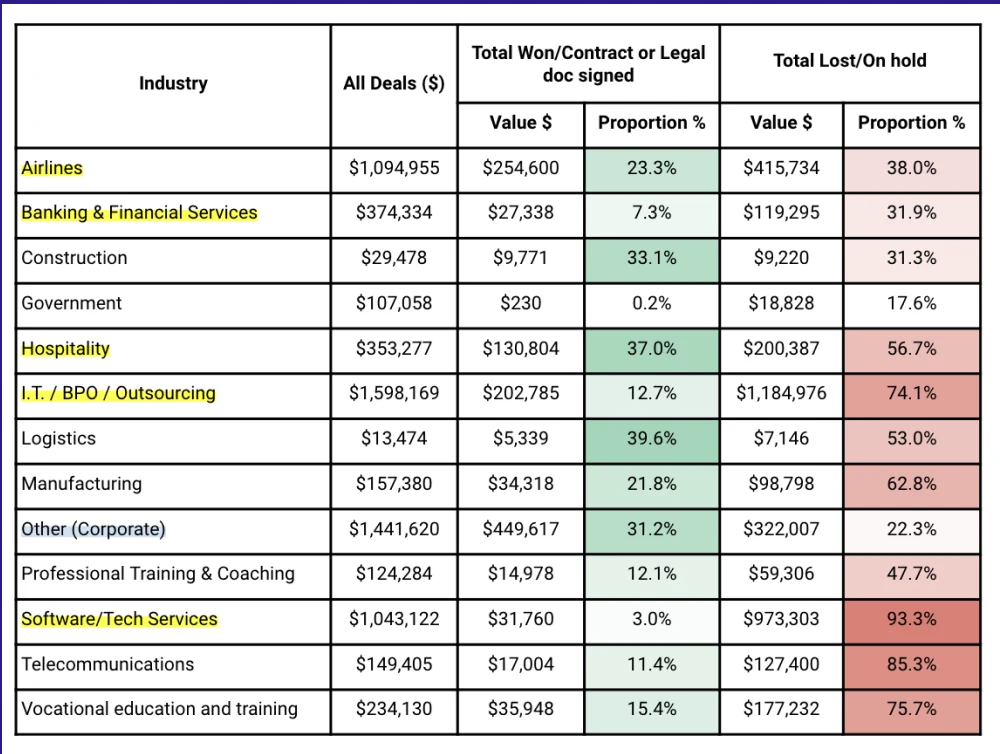
What we learned
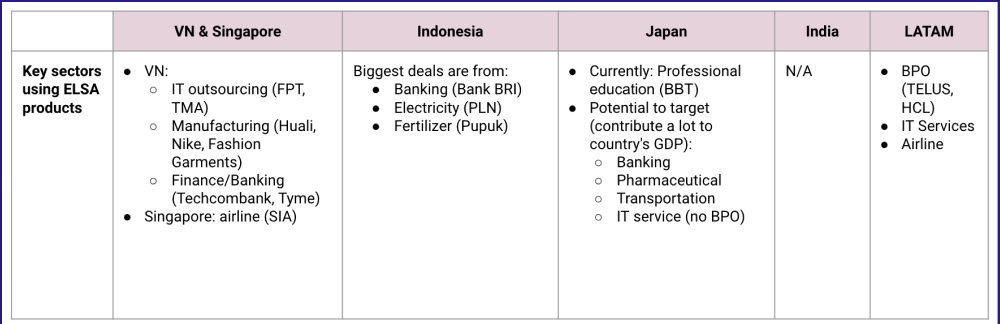
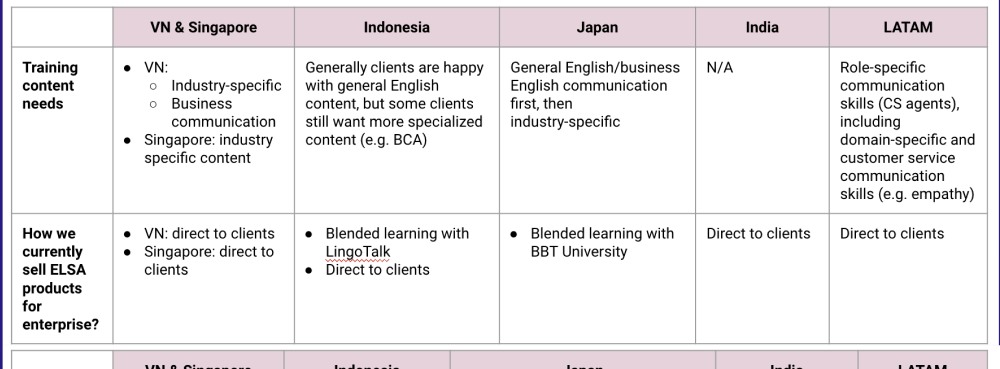
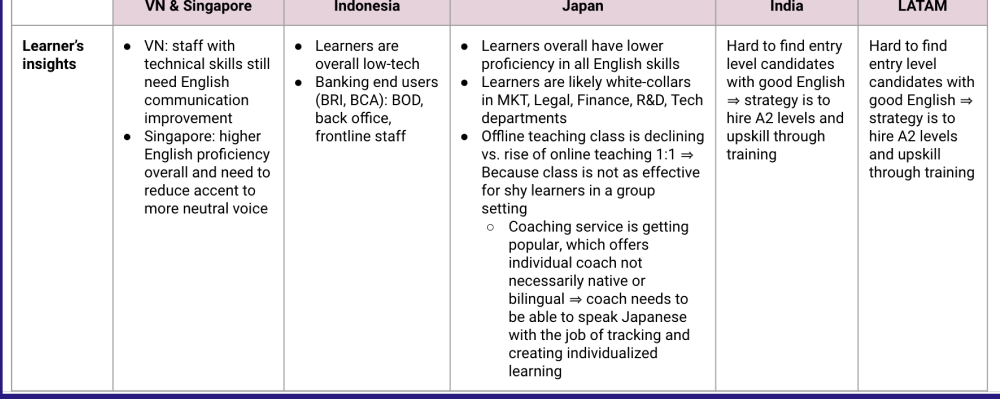
Every market sells differently, so no single industry stands out — but general English and role-specific content are needed everywhere. We had to scale content creation, fast.
03 · Stage 1 · Ideation workshops
Who uses ELSA at work
The user researcher, the product manager and I ran workshops to answer two questions: who is the user, with what journey and pain points — and what should we build for them?

Praktisha
Call-centre agent — end user

Trung
Software engineer — end user

Shanti
L&D specialist — runs the training

Tram
Director of HR — buys the program
From the workshop boards:
The end user’s journey
- 01Onboarding
- 02Practise my first lesson
- 03See my score and progress
- 04Log back in and continue
- 05Do homework assignments
- 06Performance review
Three stakeholders to design for
| Stakeholder | Goal | Pain point |
|---|---|---|
| The employee — e.g. a call-centre agent | Acquire the advanced knowledge and skills needed to grow in their career | No time to improve their English in a well-rounded way |
| L&D staff — HR or a technical manager | Improve staff skills with suitable training programs | Struggle to keep staff on training programs, especially churn cases |
| Director — head of HR or customer service | Choose effective programs with good ROI, reasonable cost and flexible involvement | Effectiveness of training isn’t easily measured |
04 · Problems
Key takeaways
Learners
- Need English for internal and external communication — client-facing roles more externally, back office internally.
- Lack the time to focus only on English training.
- Need learning that applies to their jobs to be meaningful.
Admins
- Lack the expertise to design an effective English curriculum.
- Struggle to motivate learners to participate and persist.
- Spend a lot of time tracking performance across platforms.
- Need to show the ROI of training initiatives.
05 · Proposition
A range of enterprise solutions
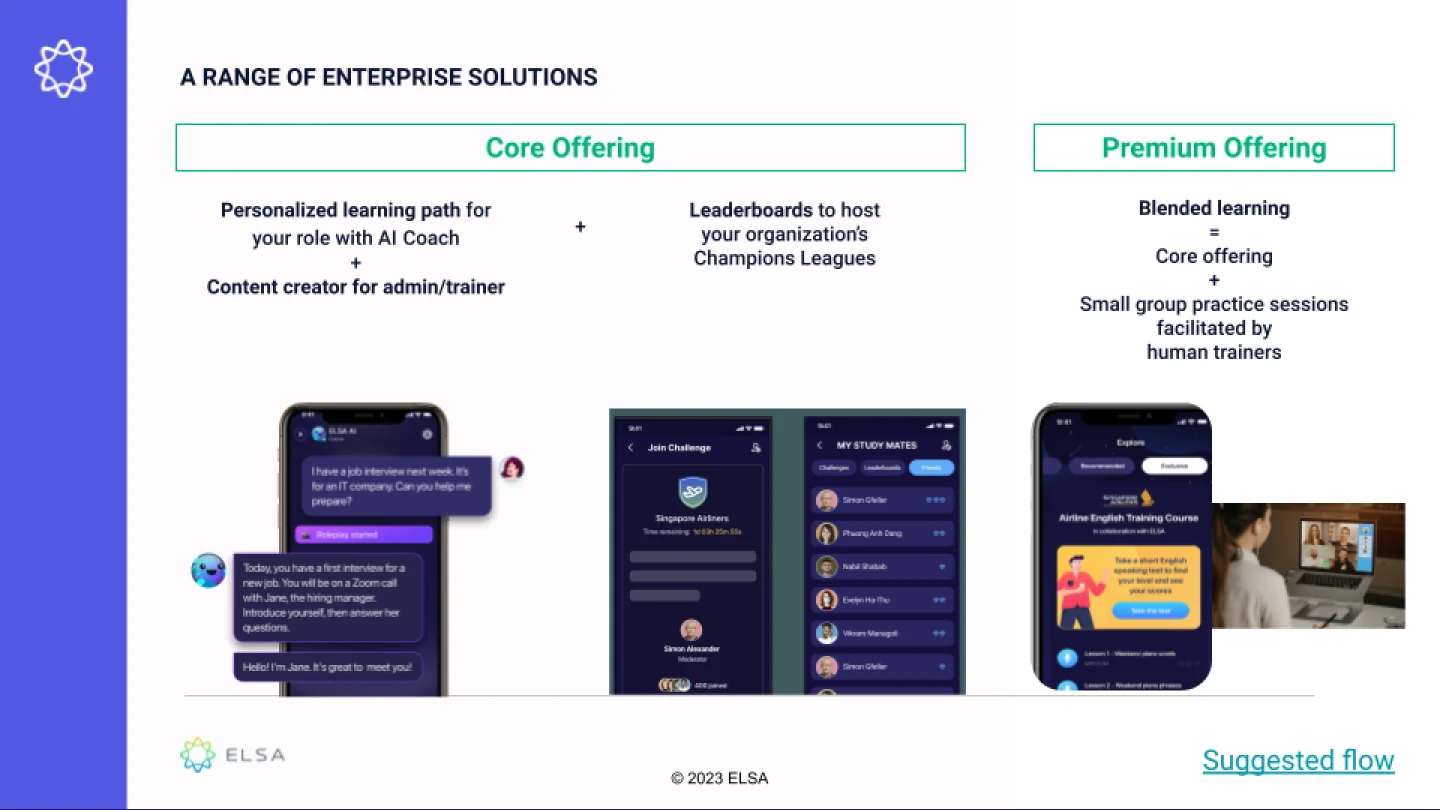
| Offering | For | What’s included | Pricing logic |
|---|---|---|---|
| Core | Mass training | Personalised learning path with an AI coach, internal leaderboards, content creation for admins | Lower cost per licence as headcount grows |
| Premium | Mid- and high-level training | The core offering plus small-group practice with human trainers | Higher cost per licence, for focus groups and big logos |
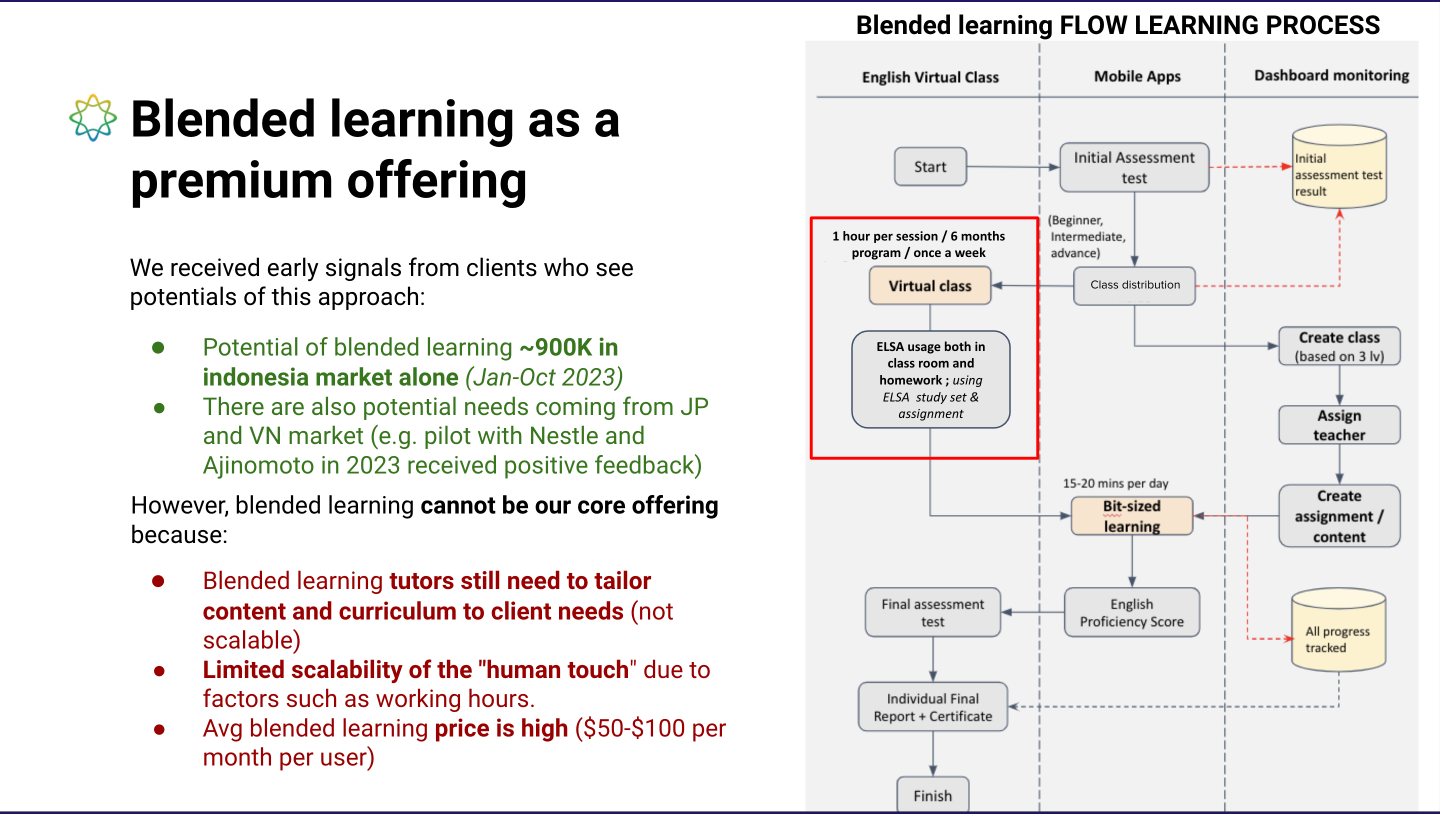
Pricing
We gauged what clients would pay from their budgets and competitors’ pricing, then explored which offerings to promote.
What clients told us
- Nestlé: up to $530 per learner a year; prefers blended learning
- FPT: $500 per learner per 3–6 month blended course; $50 per user per 3-month course for mass training
What competitors charge
- goFluent: €25 ($27) per learner a month up to 100 learners, falling with volume
- Enterprise from €10 a year, down to €2 per learner — 20,000 users for €95,000
per learner per year, 100-seat package
per learner per year, 500-seat package
06 · Product · Solution 01
A personalised learning path, with an AI coach
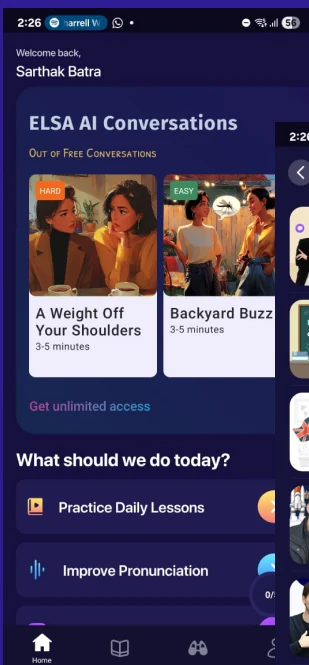
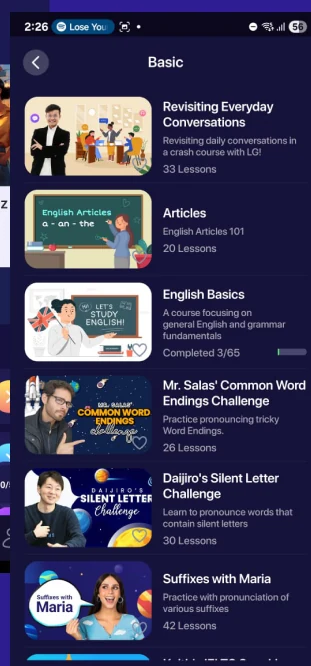
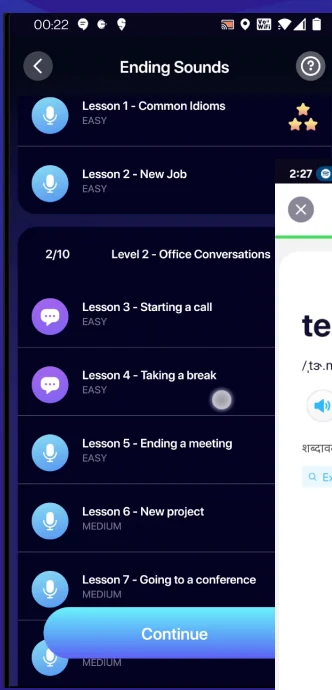
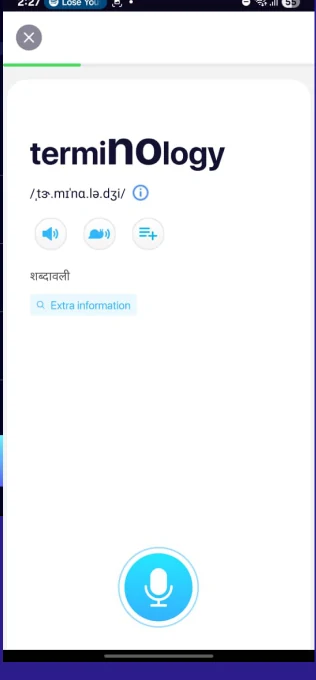
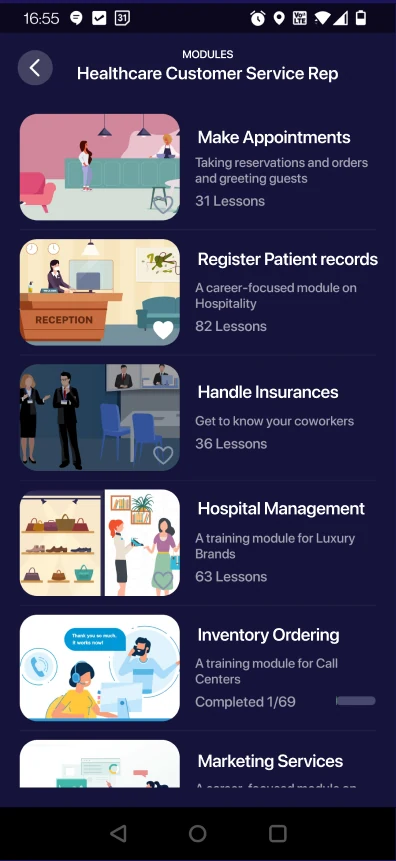
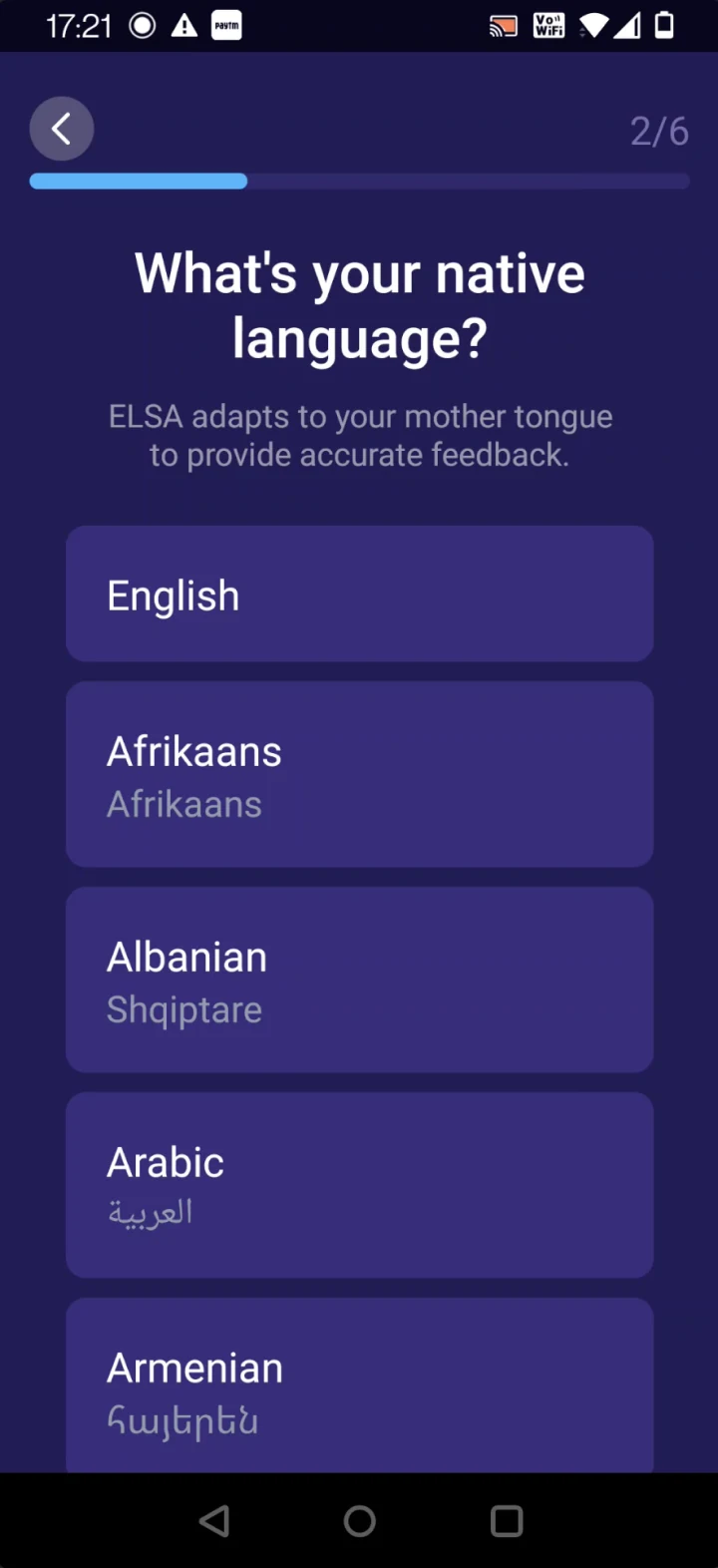
Based on purpose, job, role, preferred topics and proficiency, ELSA AI recommends relevant lessons and game types at the right difficulty — so every learner practises with a clear direction.
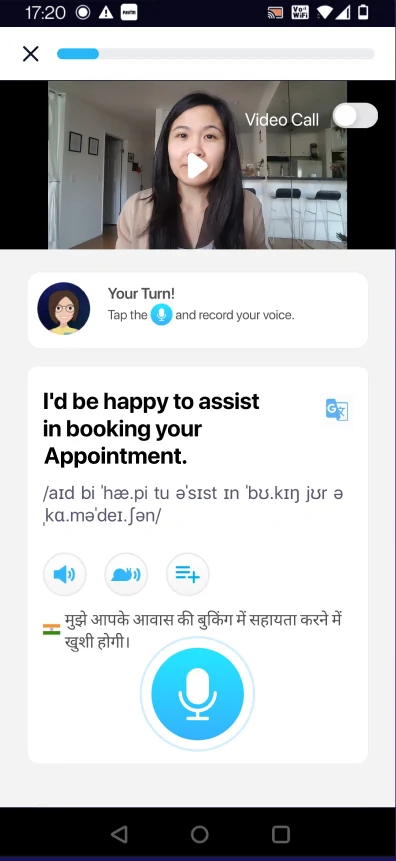
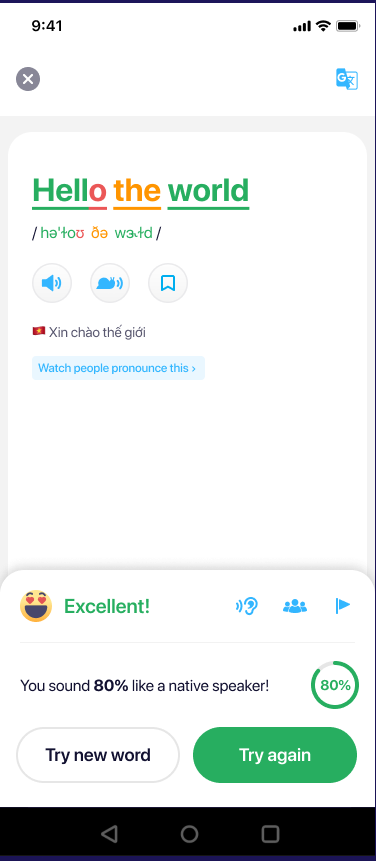
Early access, then install
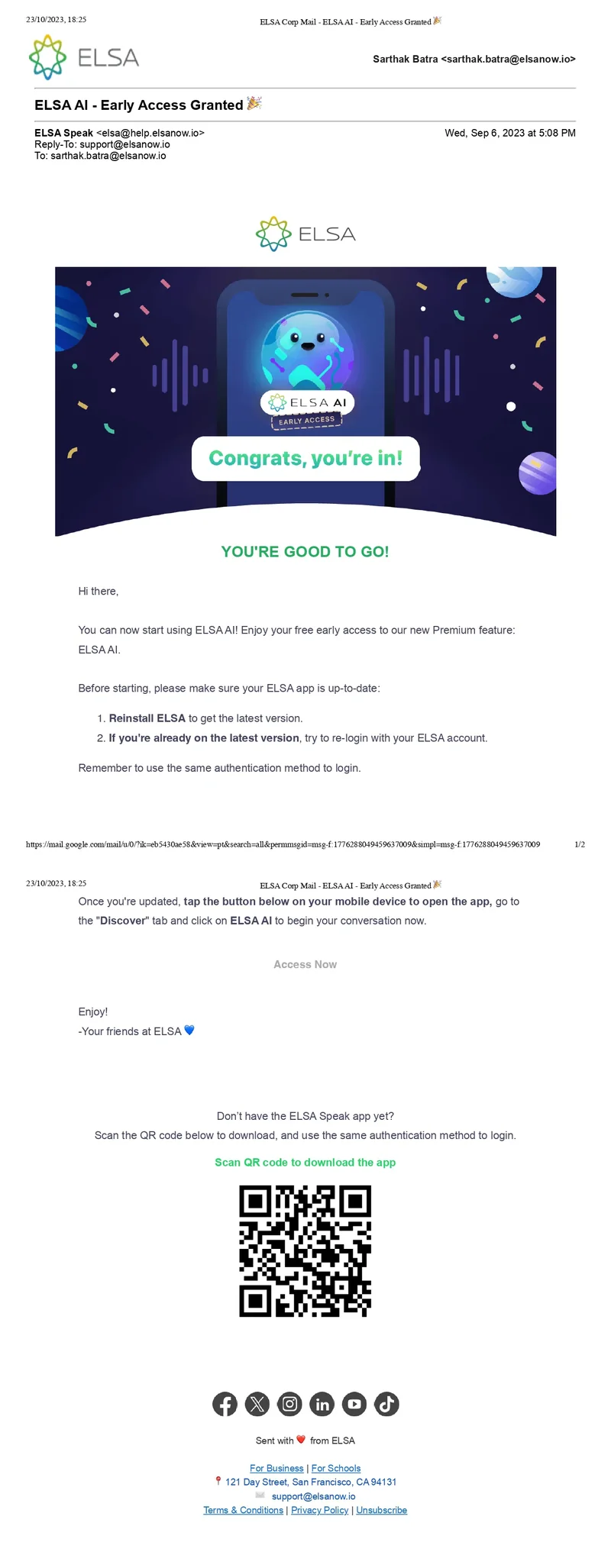
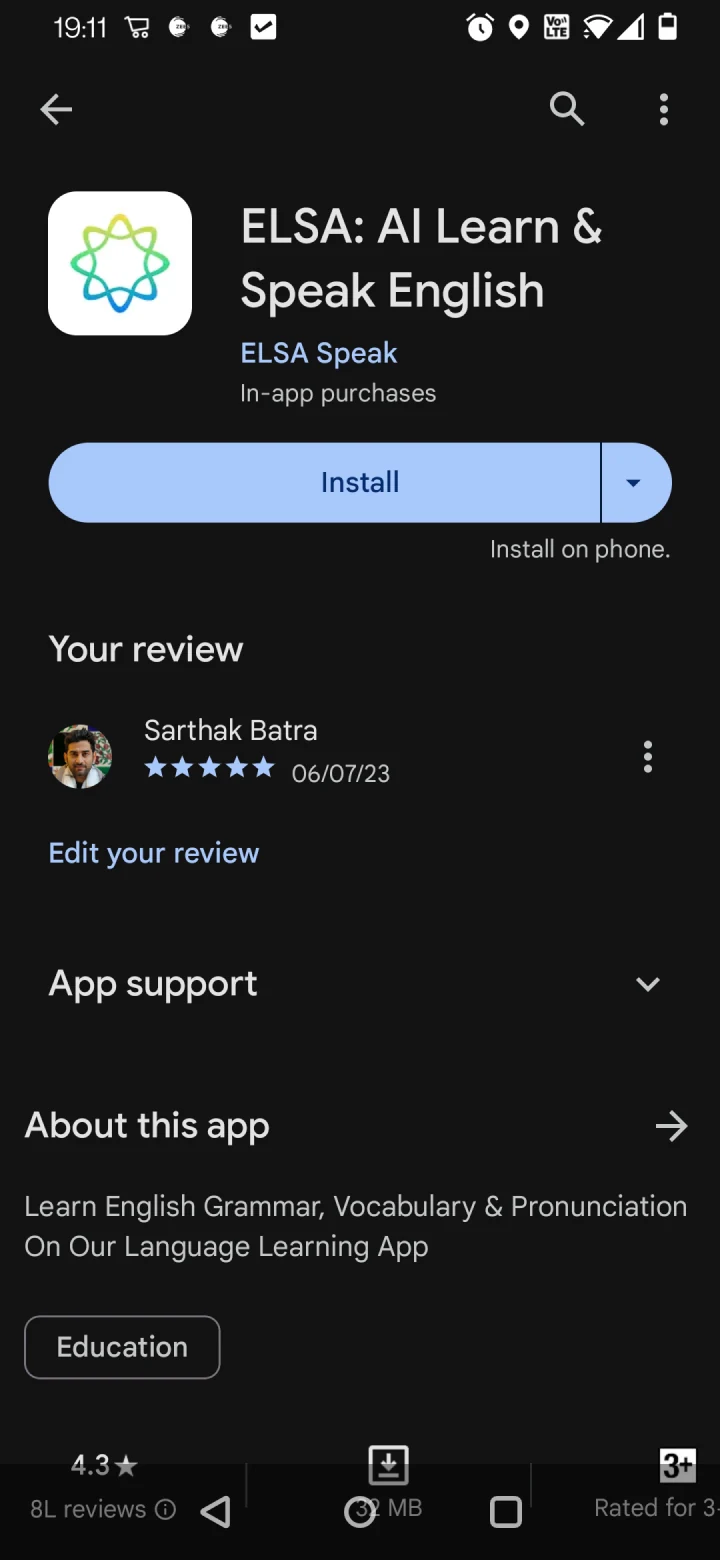
The learner gets an early-access email and installs ELSA from the Play Store.
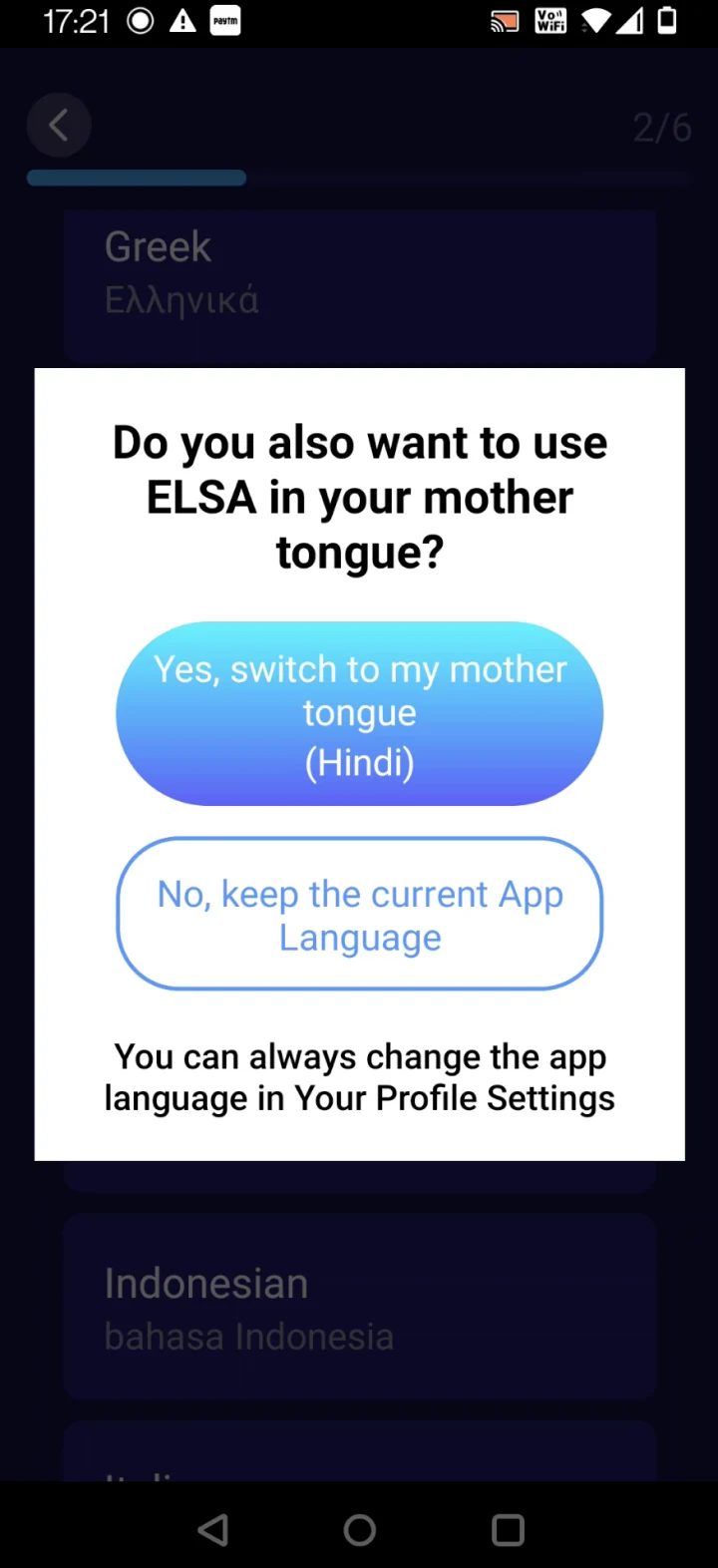
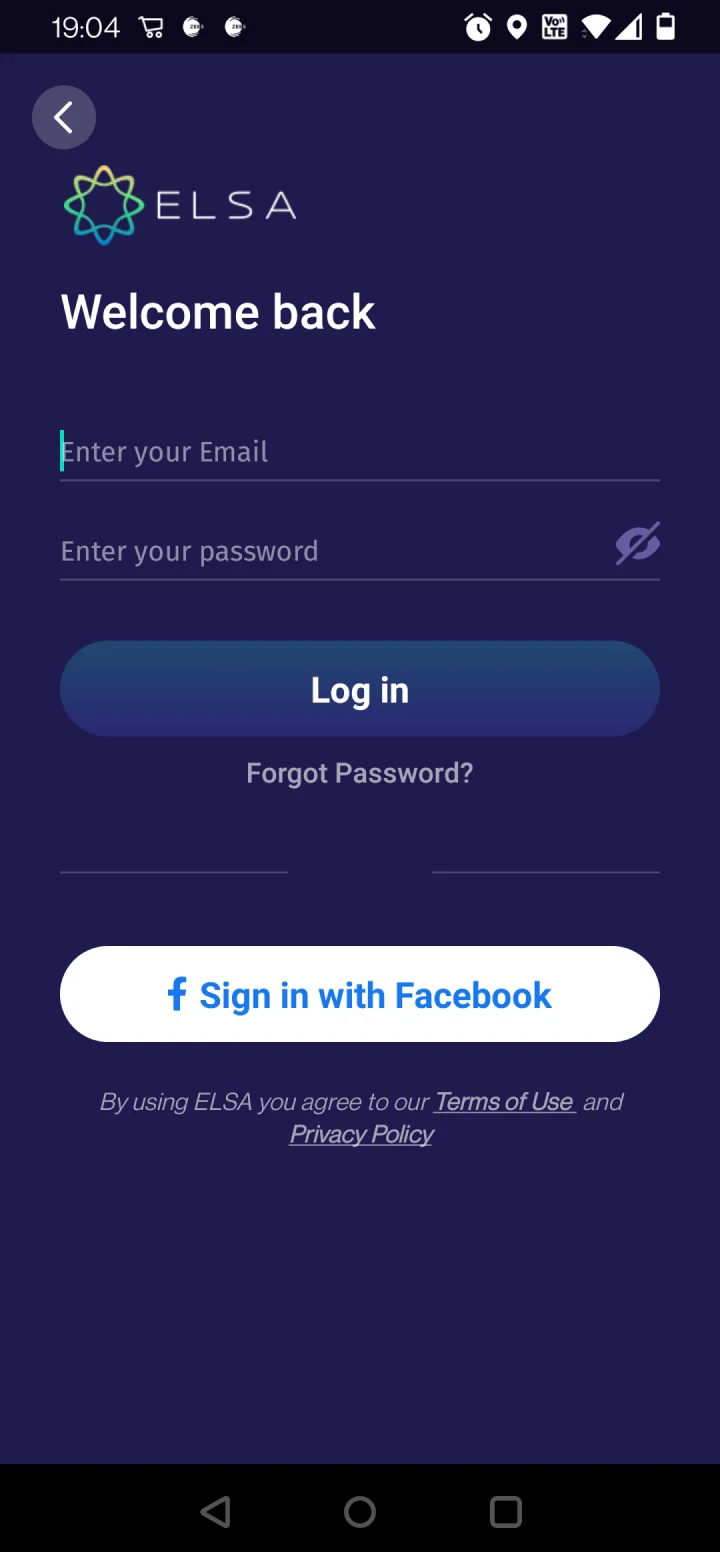
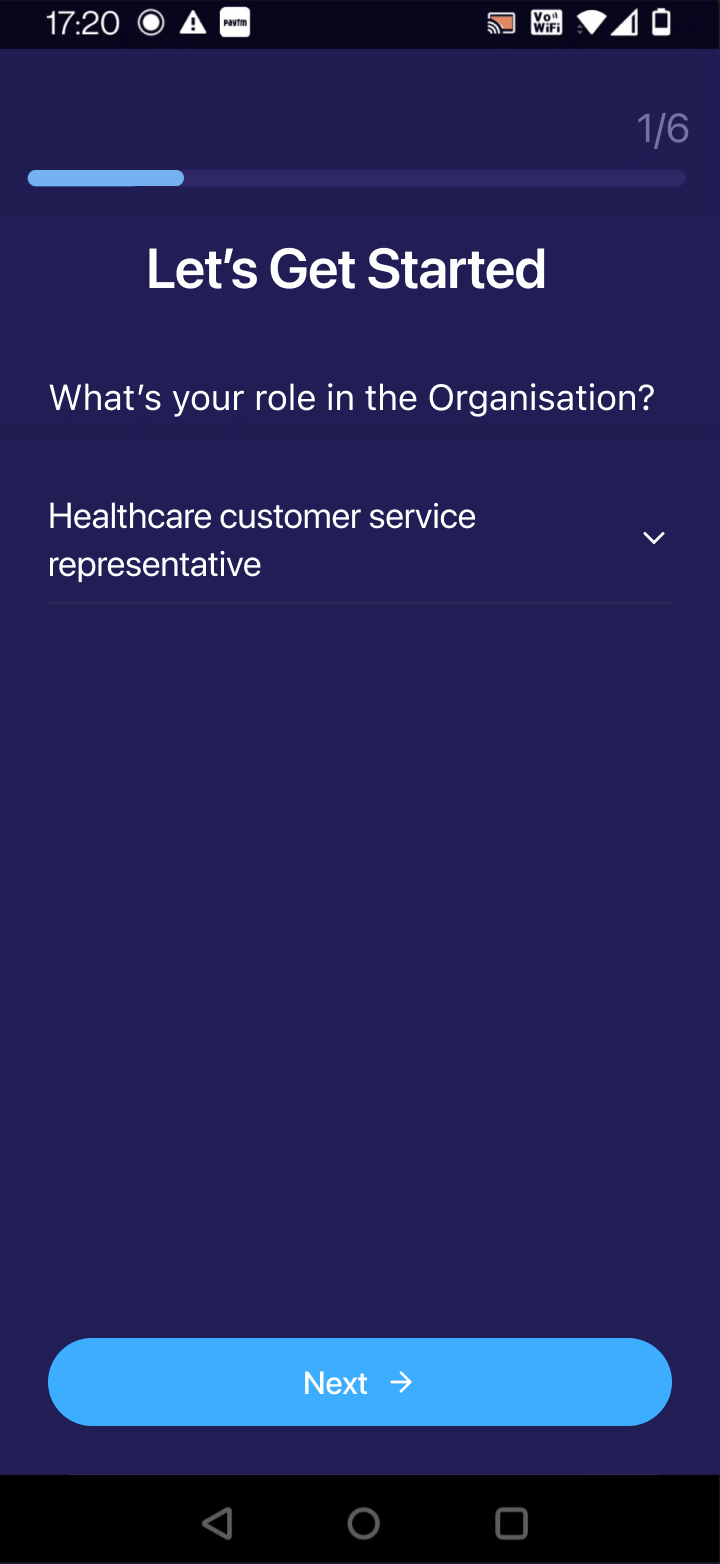
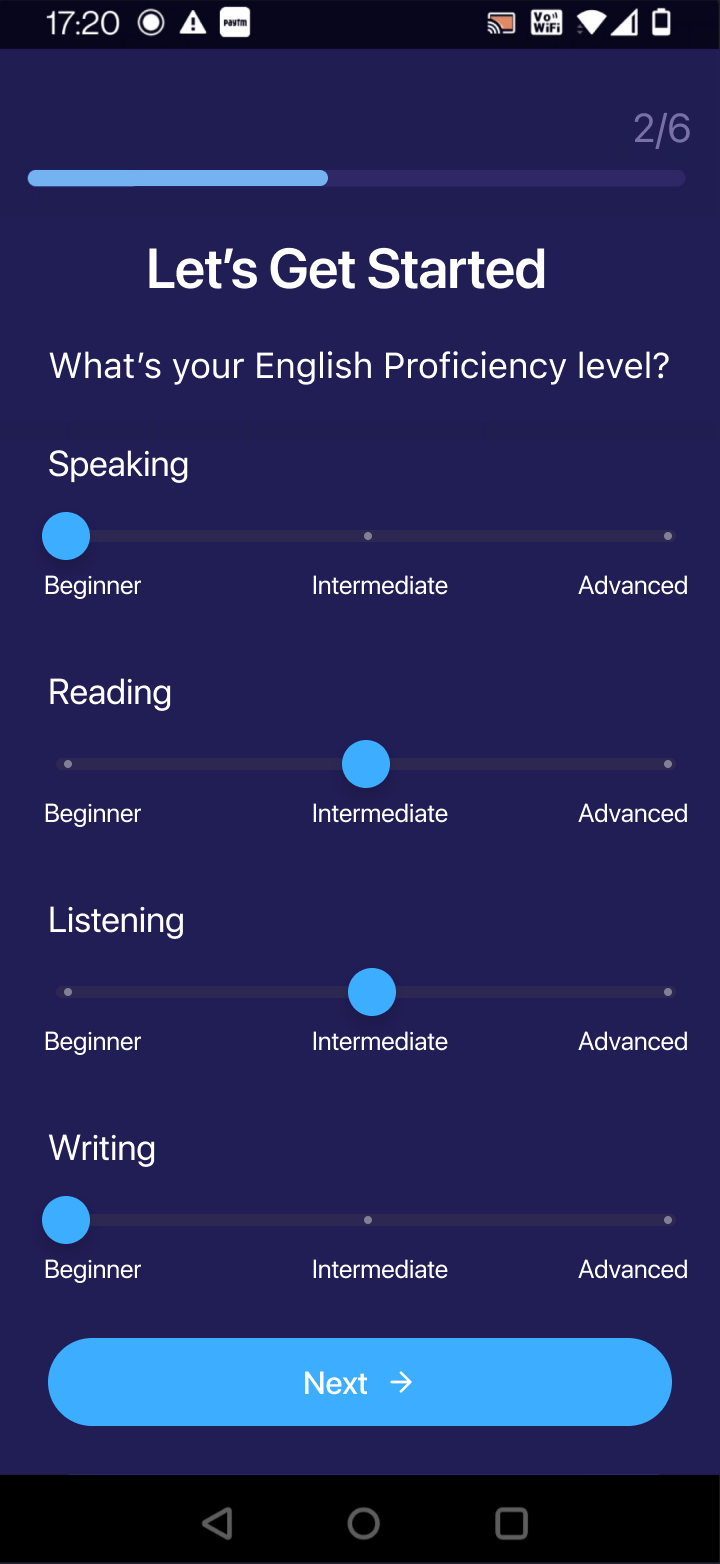
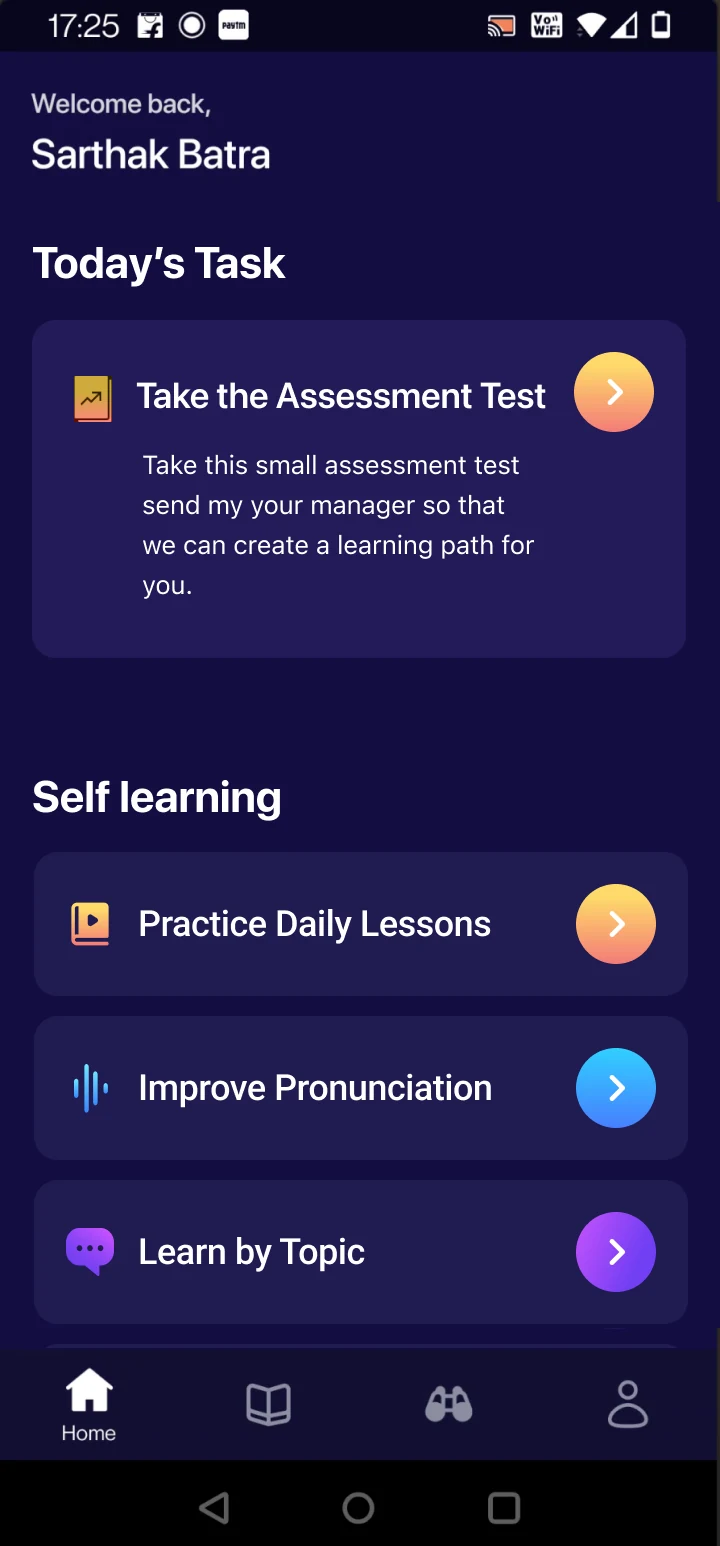
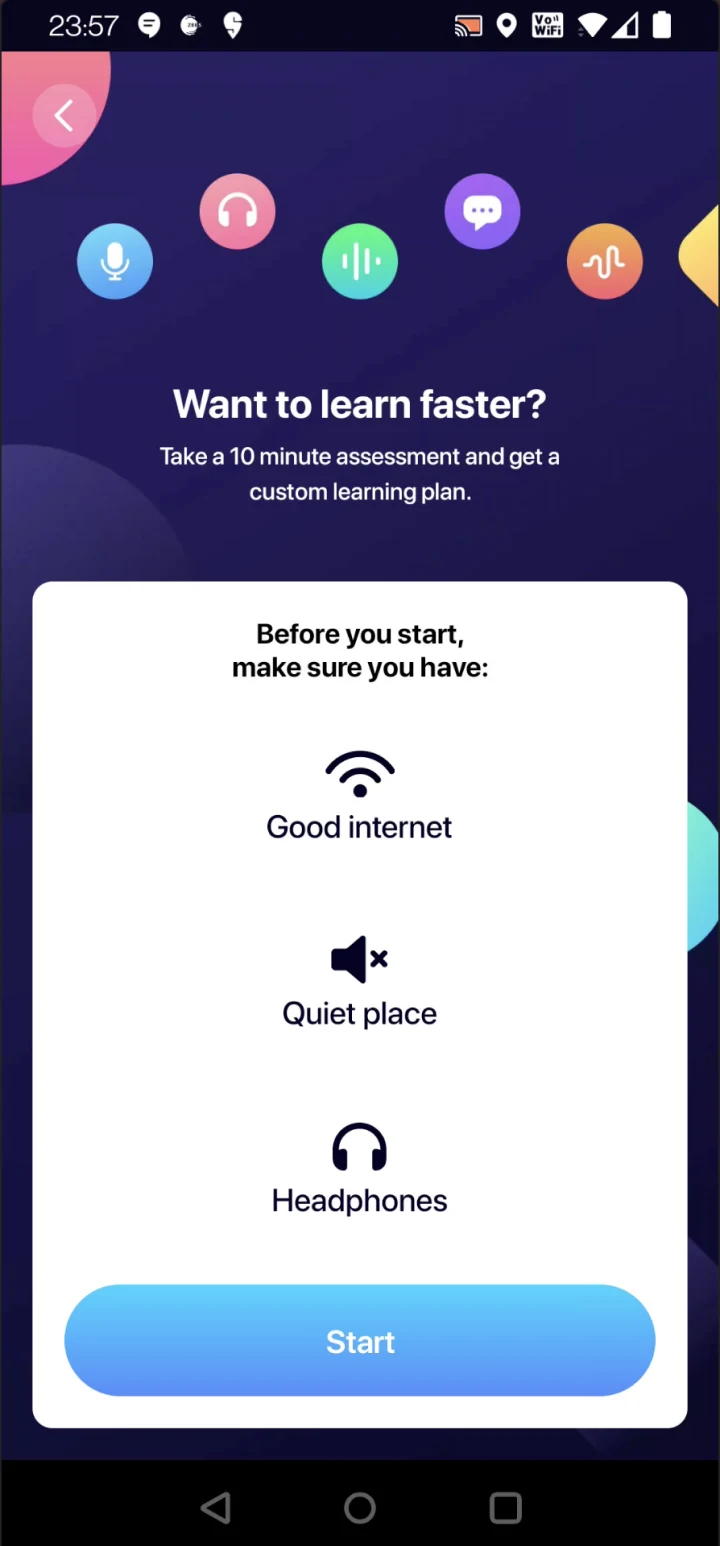
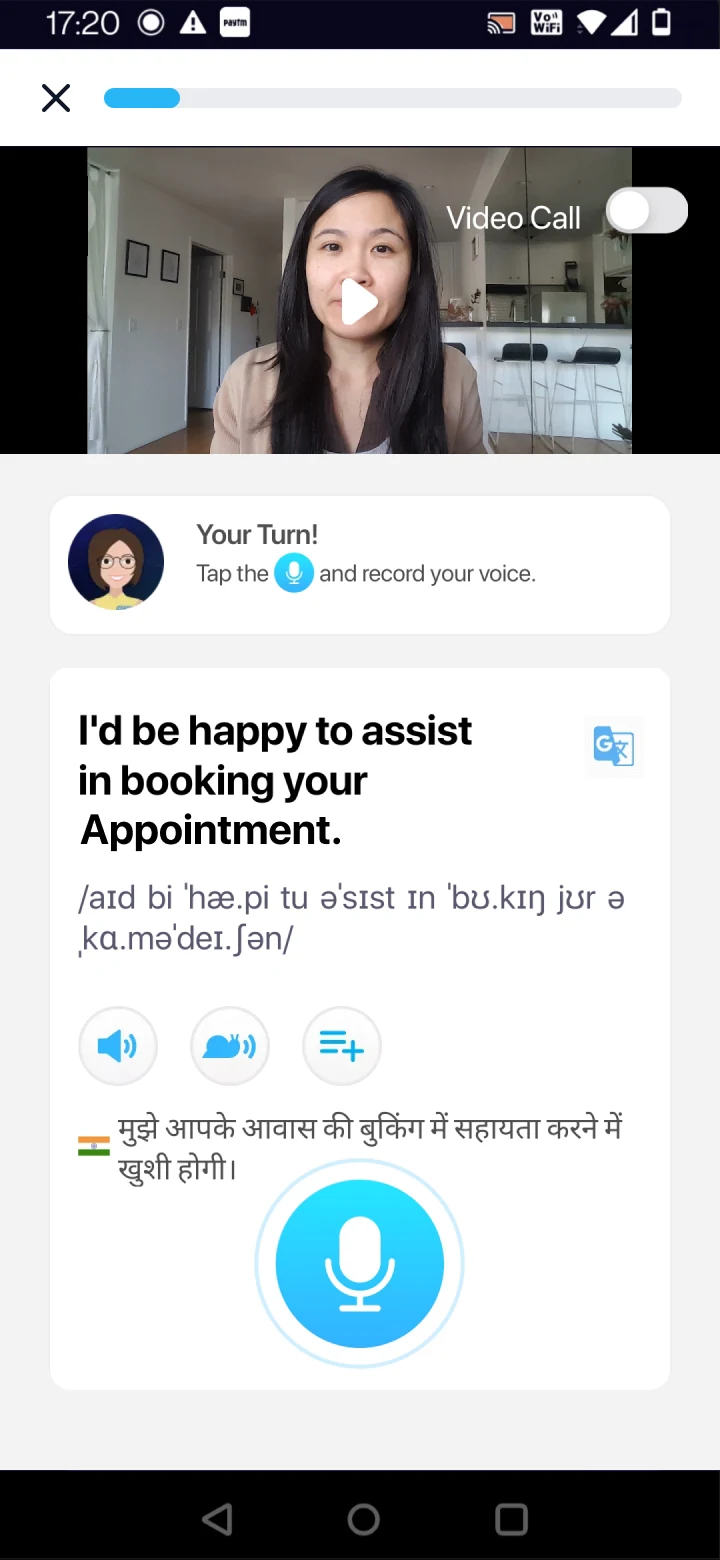
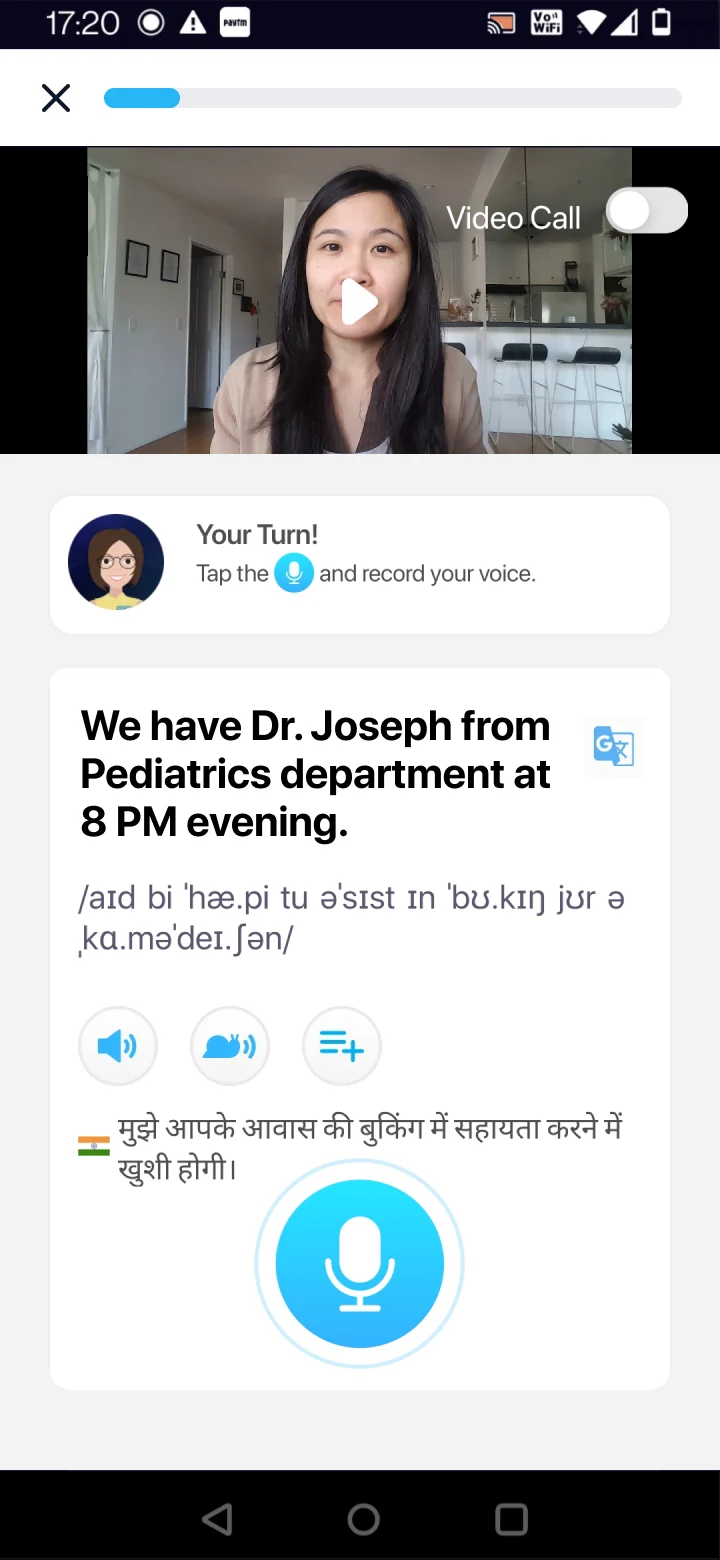
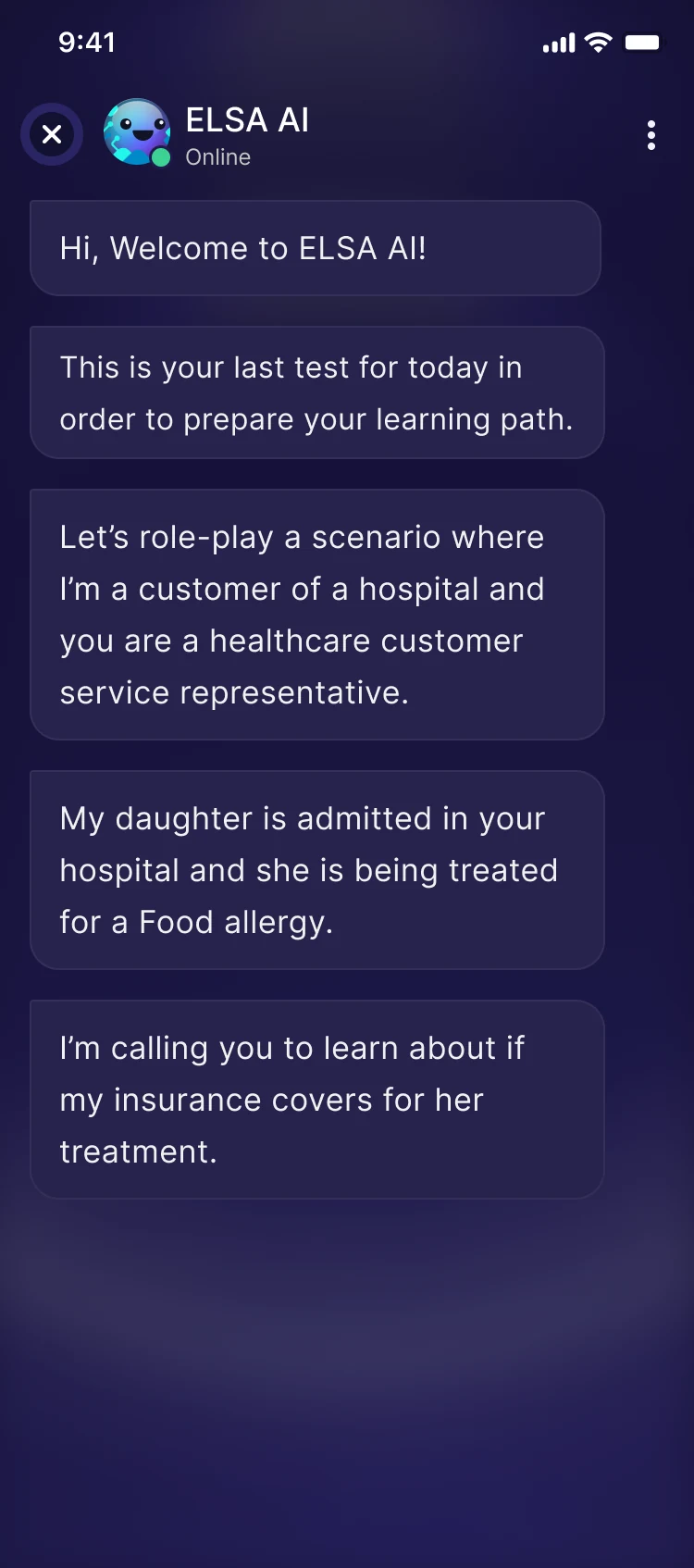
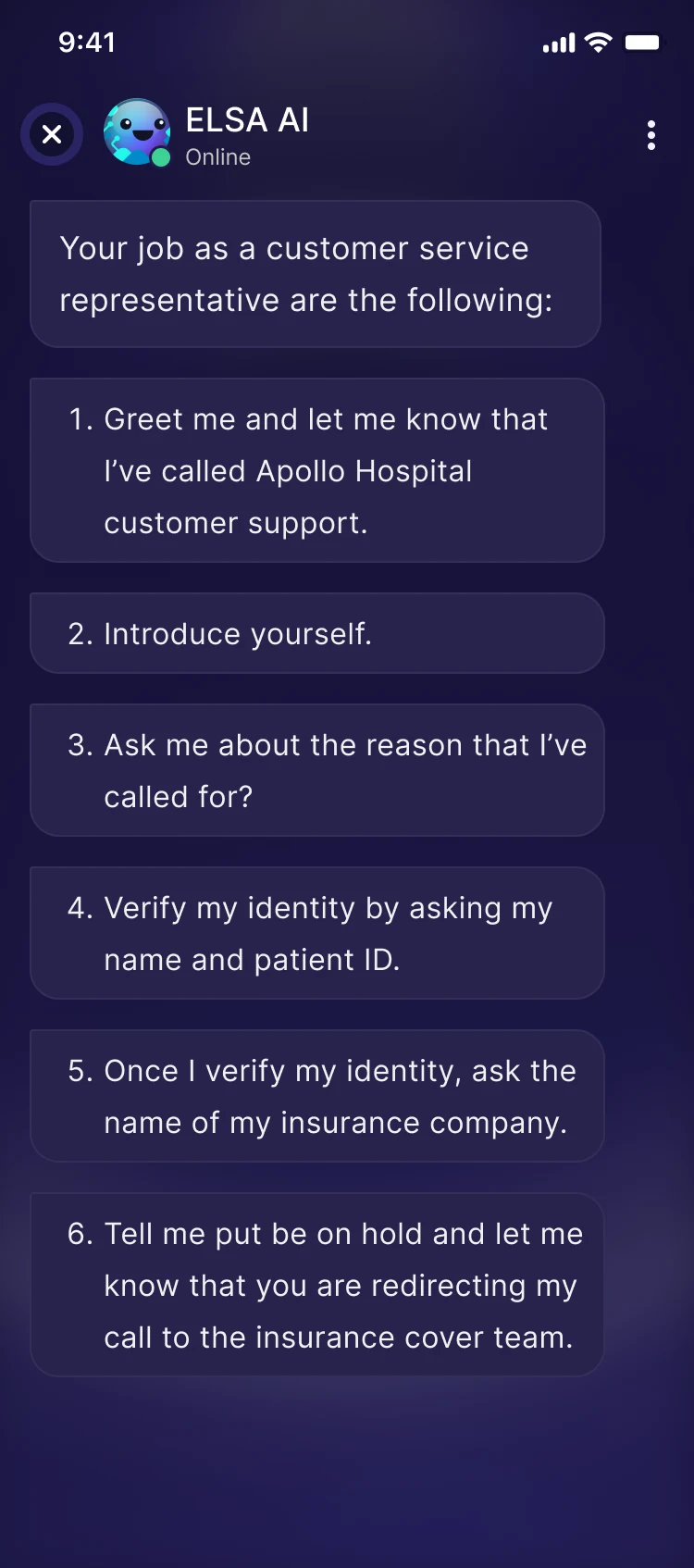
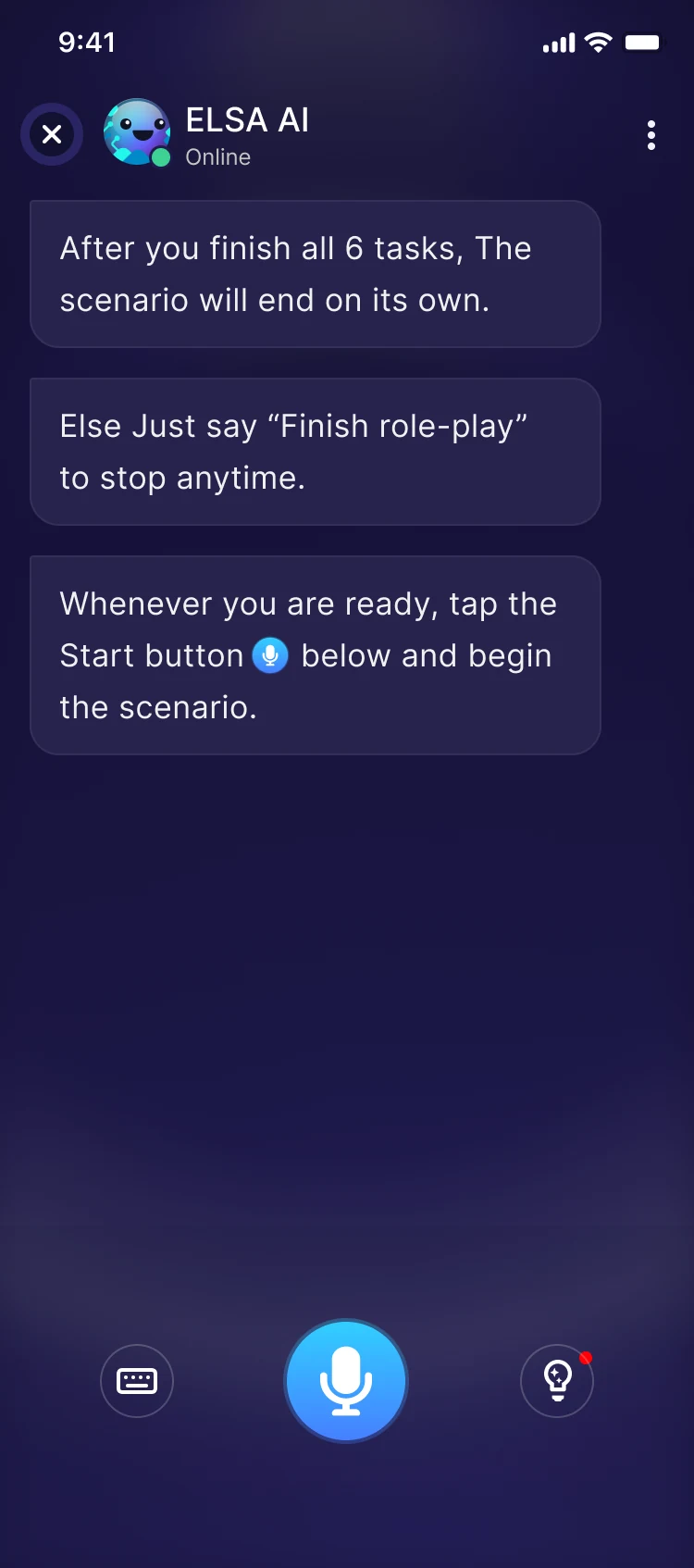
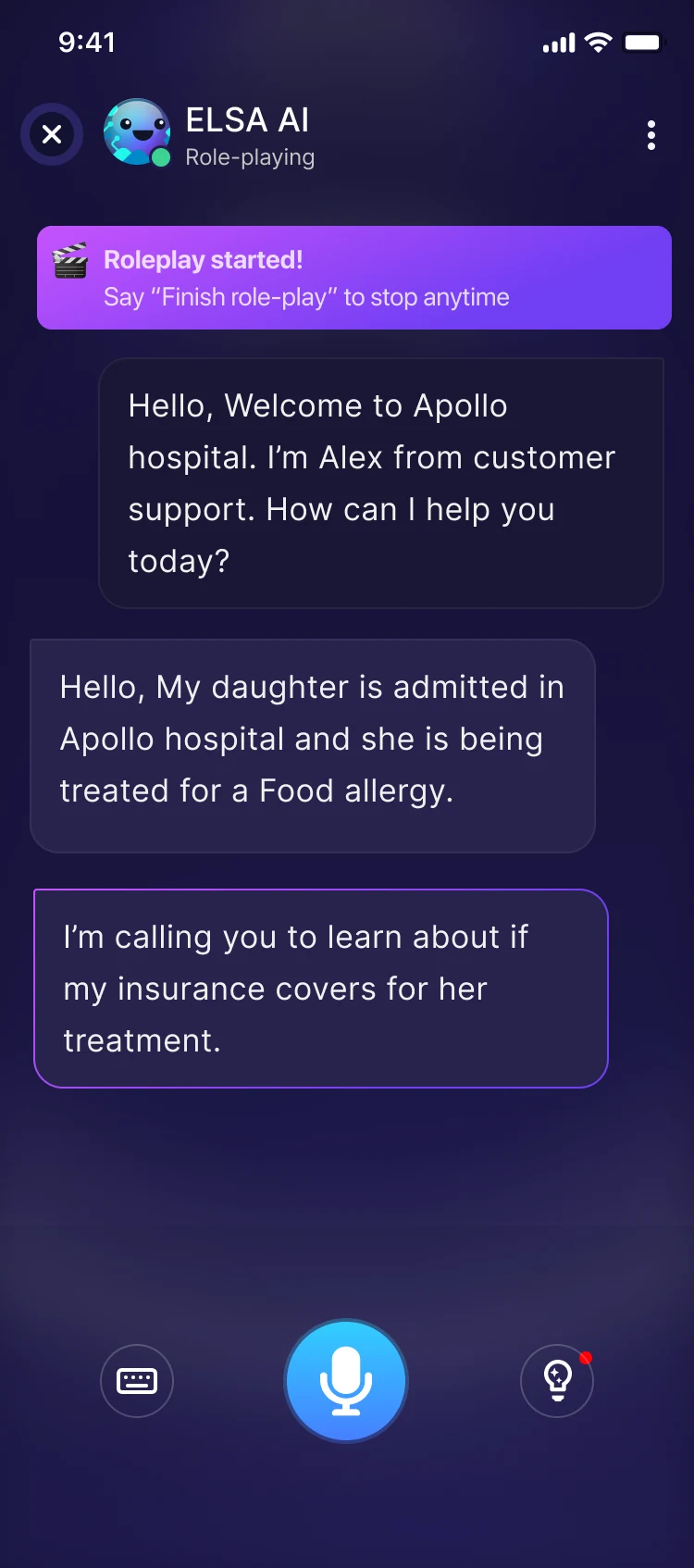
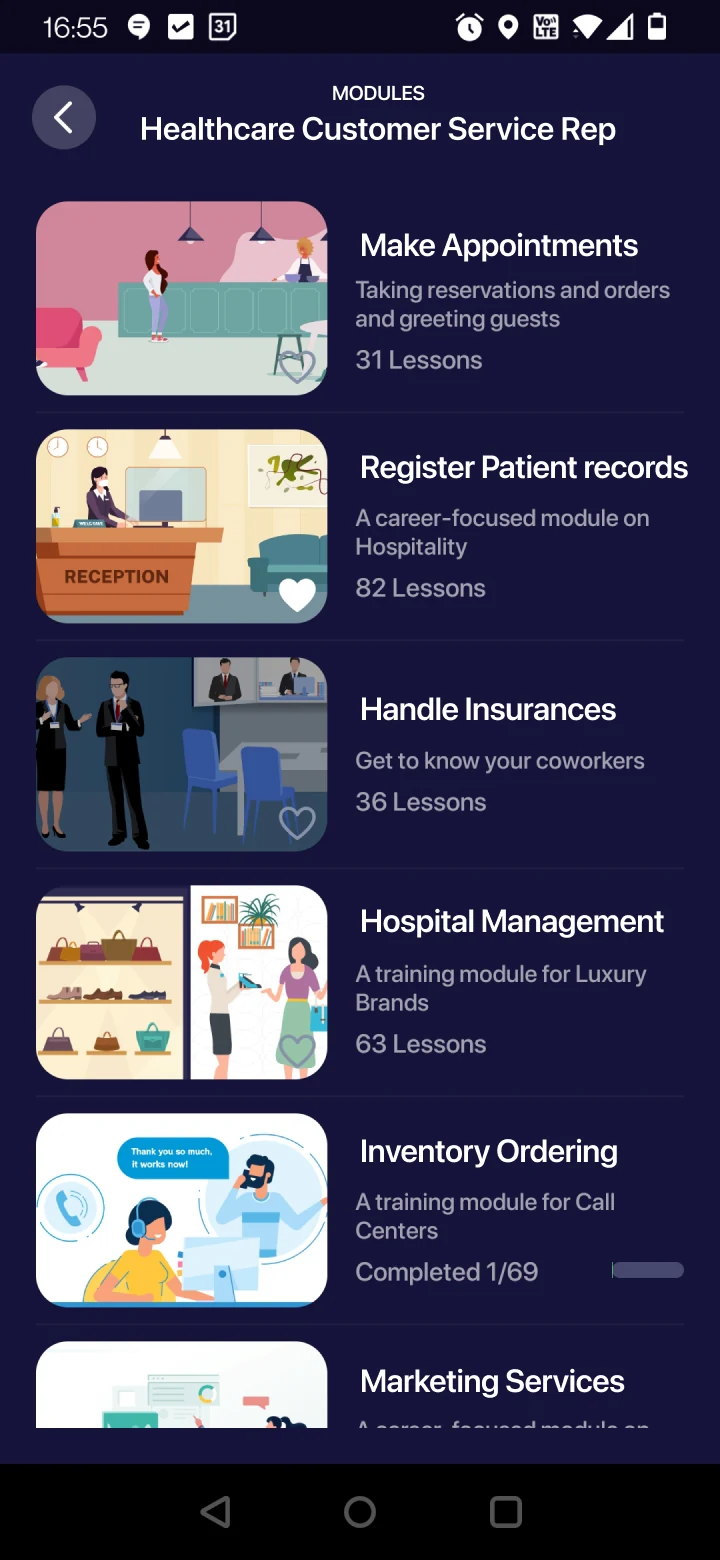
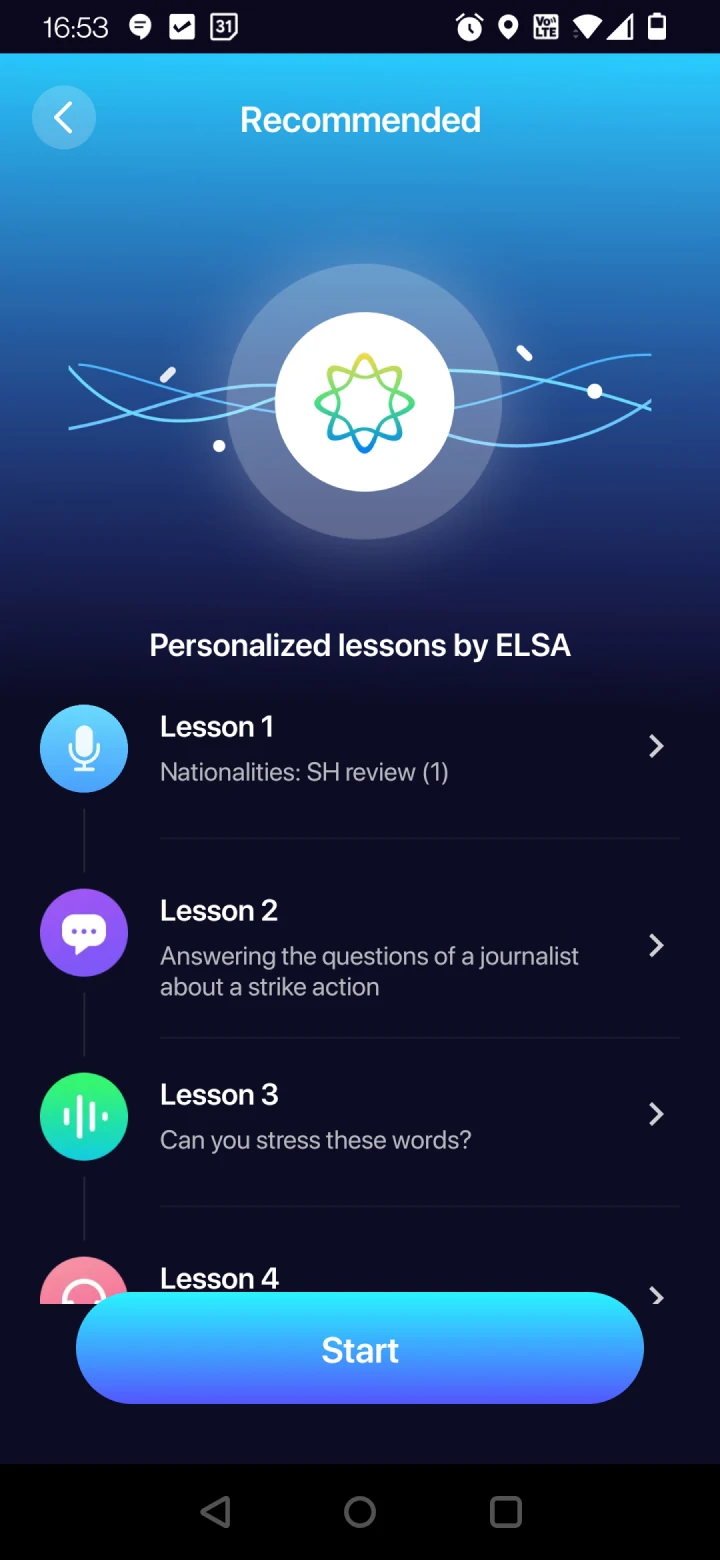
Walk the flow yourself, frame by frame:
07 · Product · Solution 02
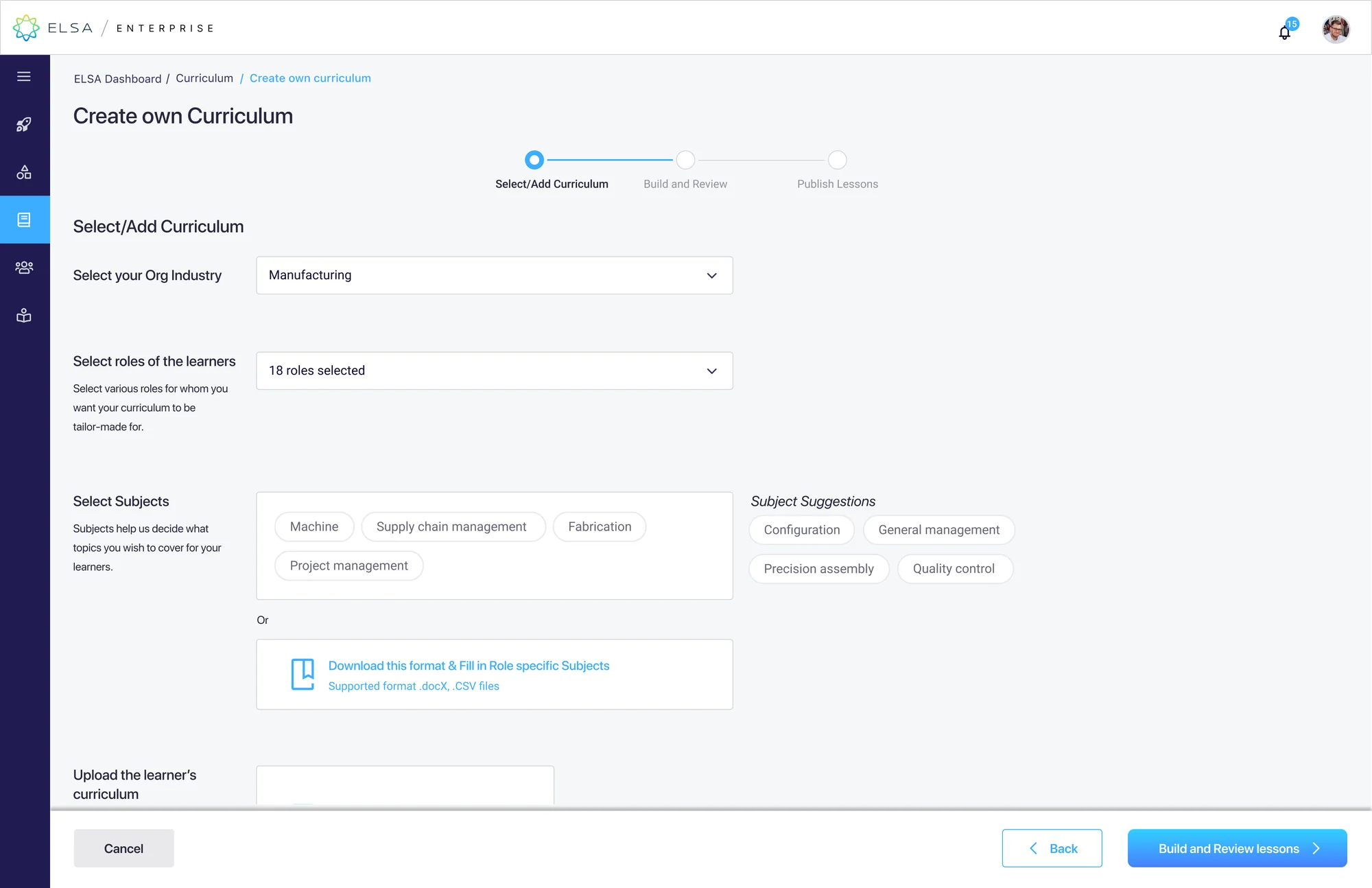
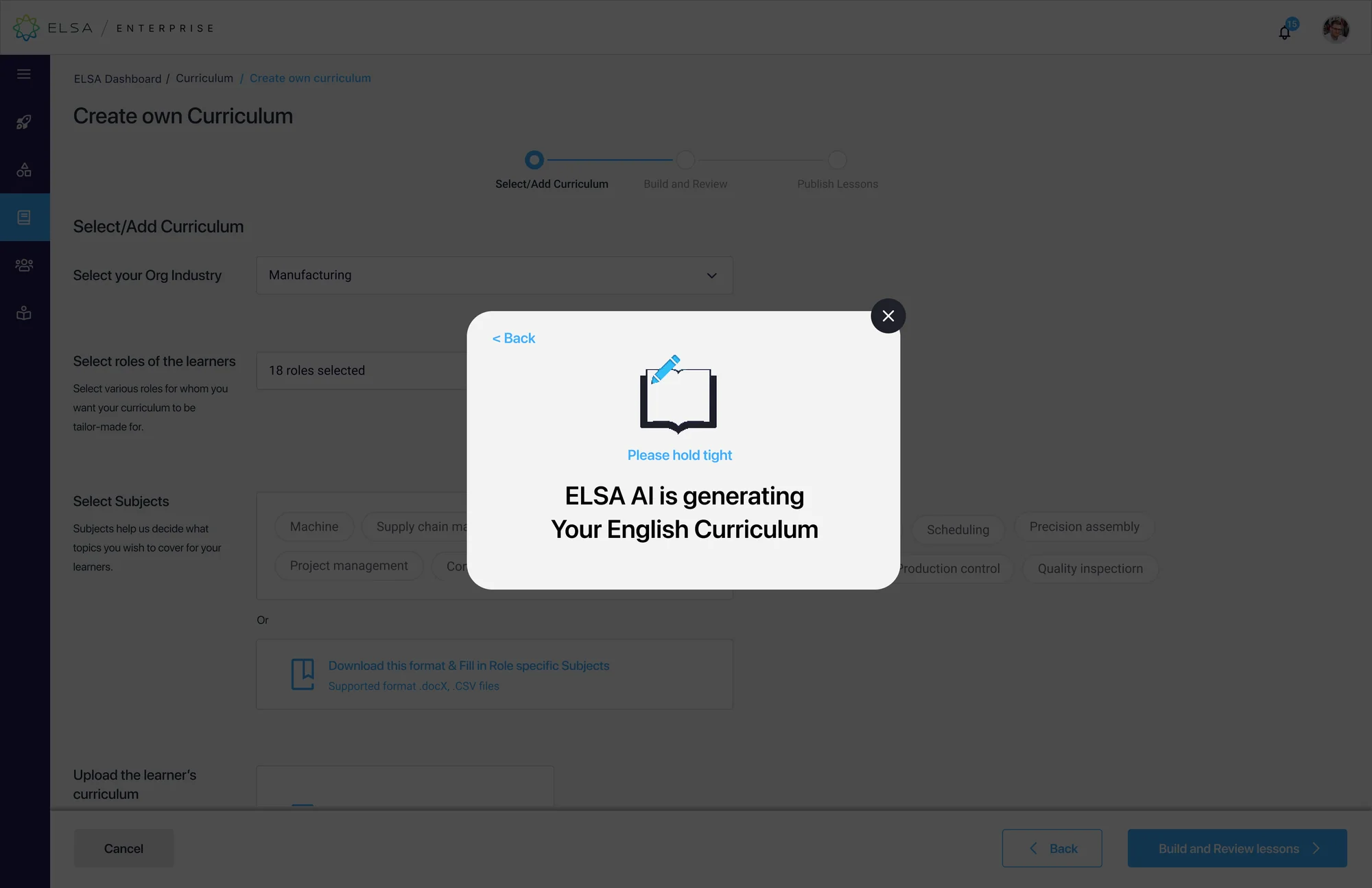
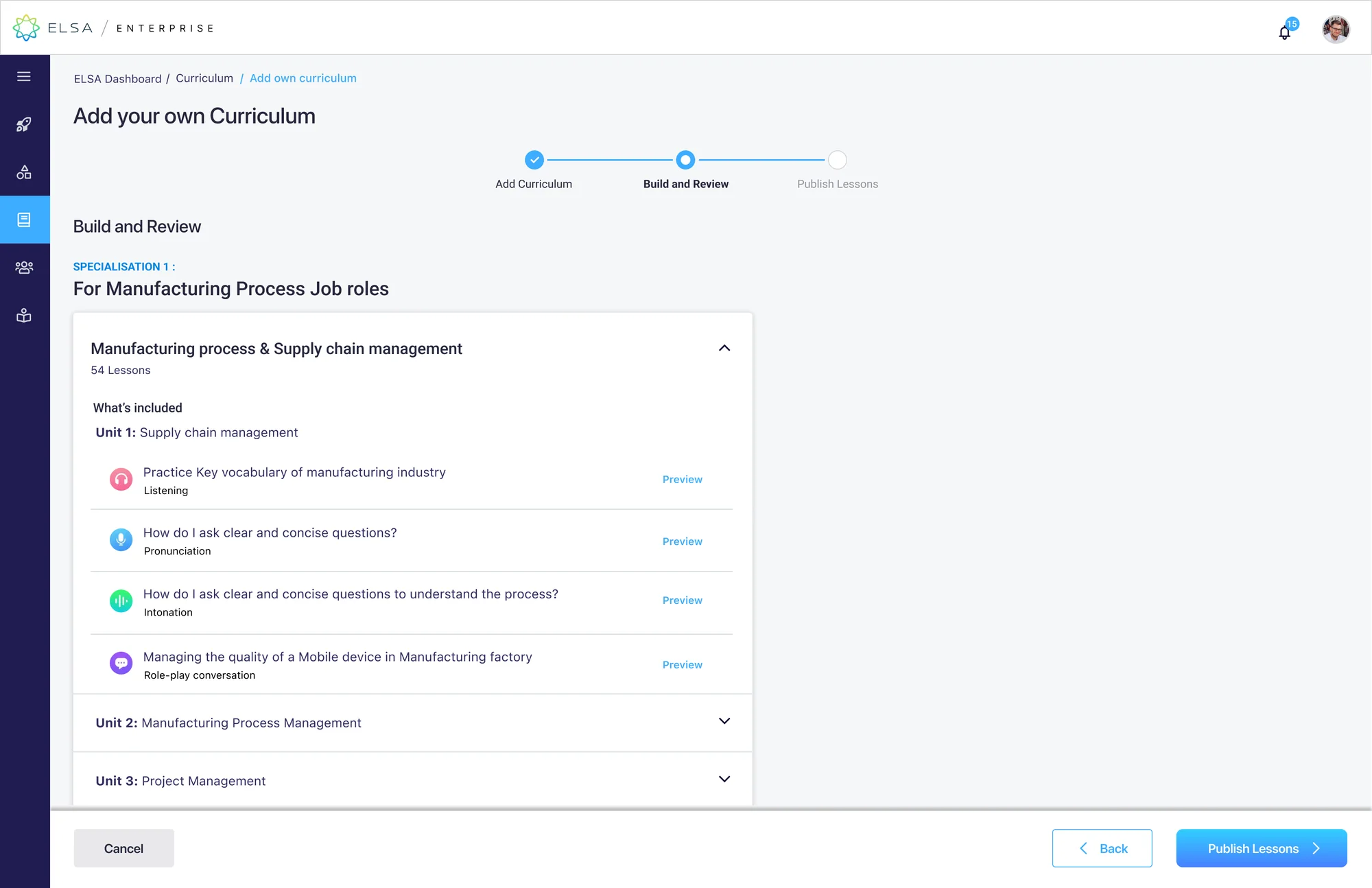
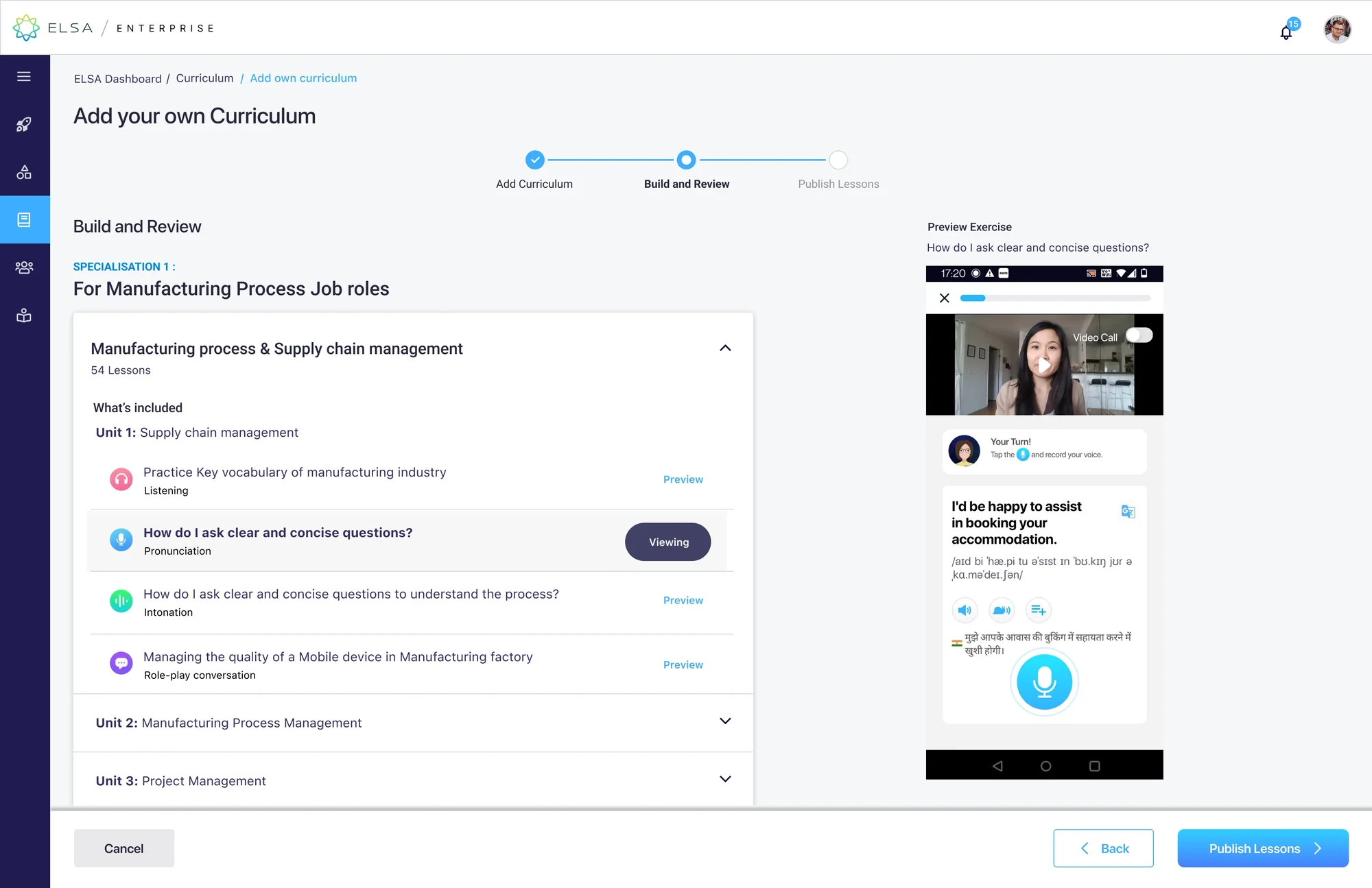
Create your own content with Gen AI
For admins and trainers who couldn’t use ELSA for advanced communication training, couldn’t match its scores to internal metrics, and whose learners didn’t know how best to use the app.
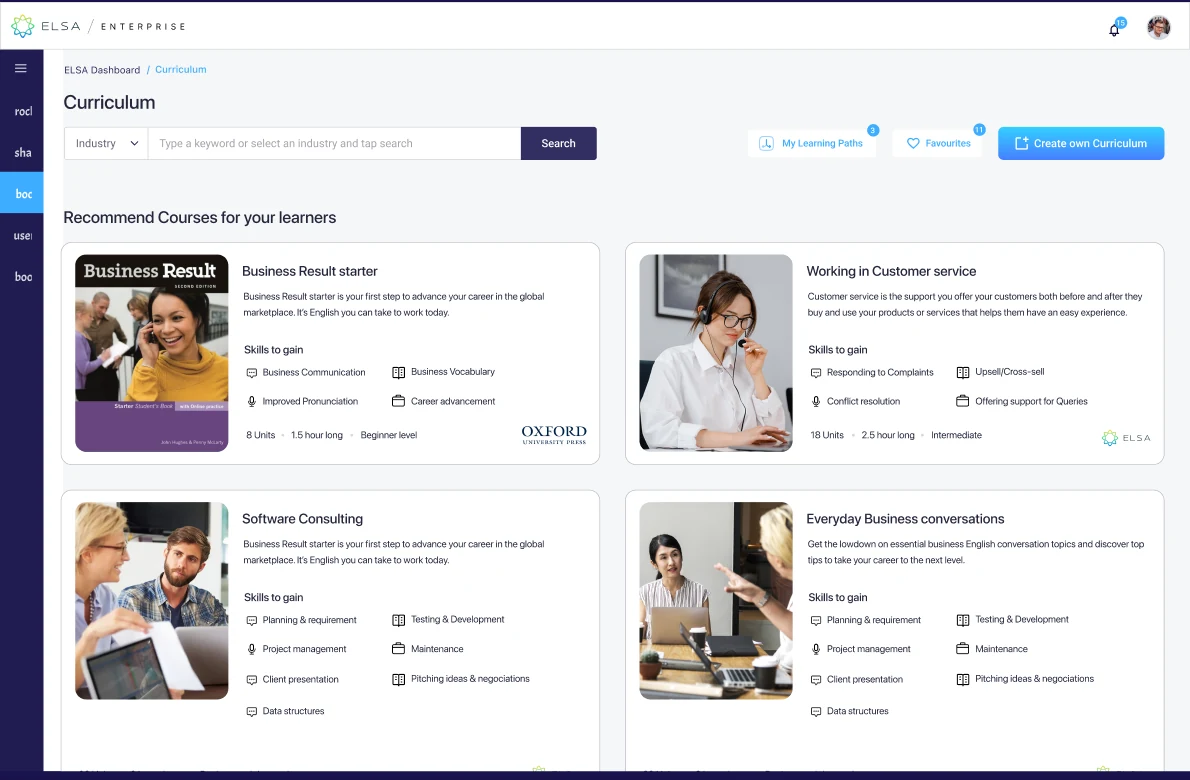
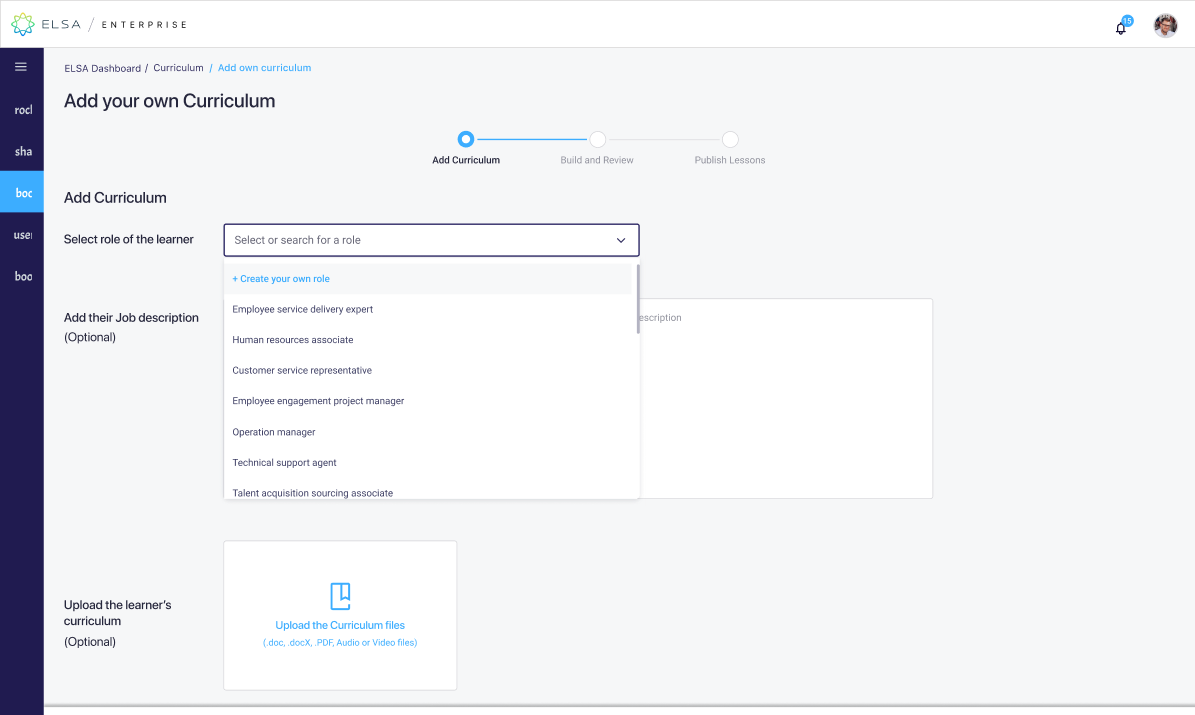
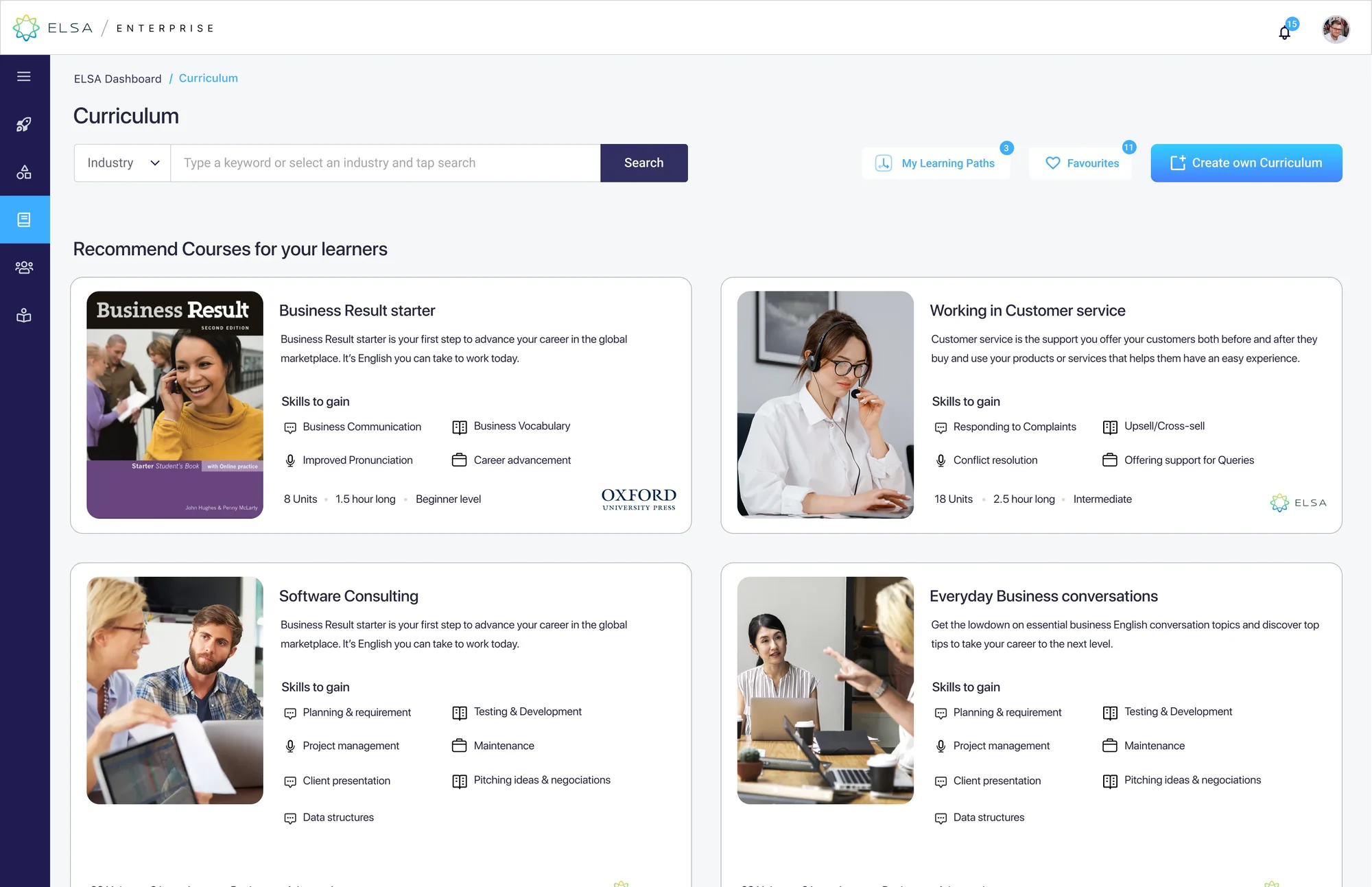
Start from recommendations
Courses recommended for the organisation’s learners, with Create own Curriculum.
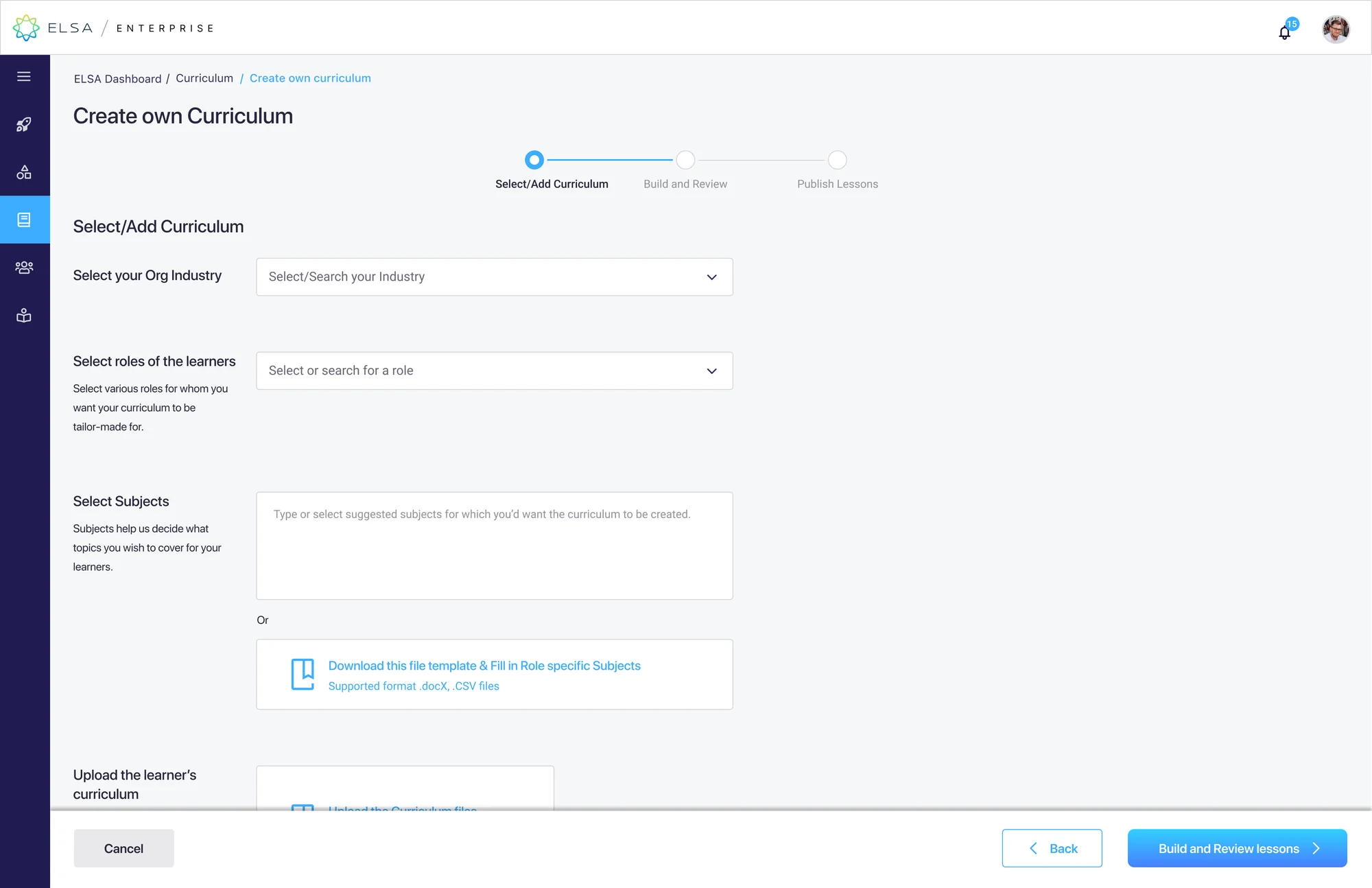
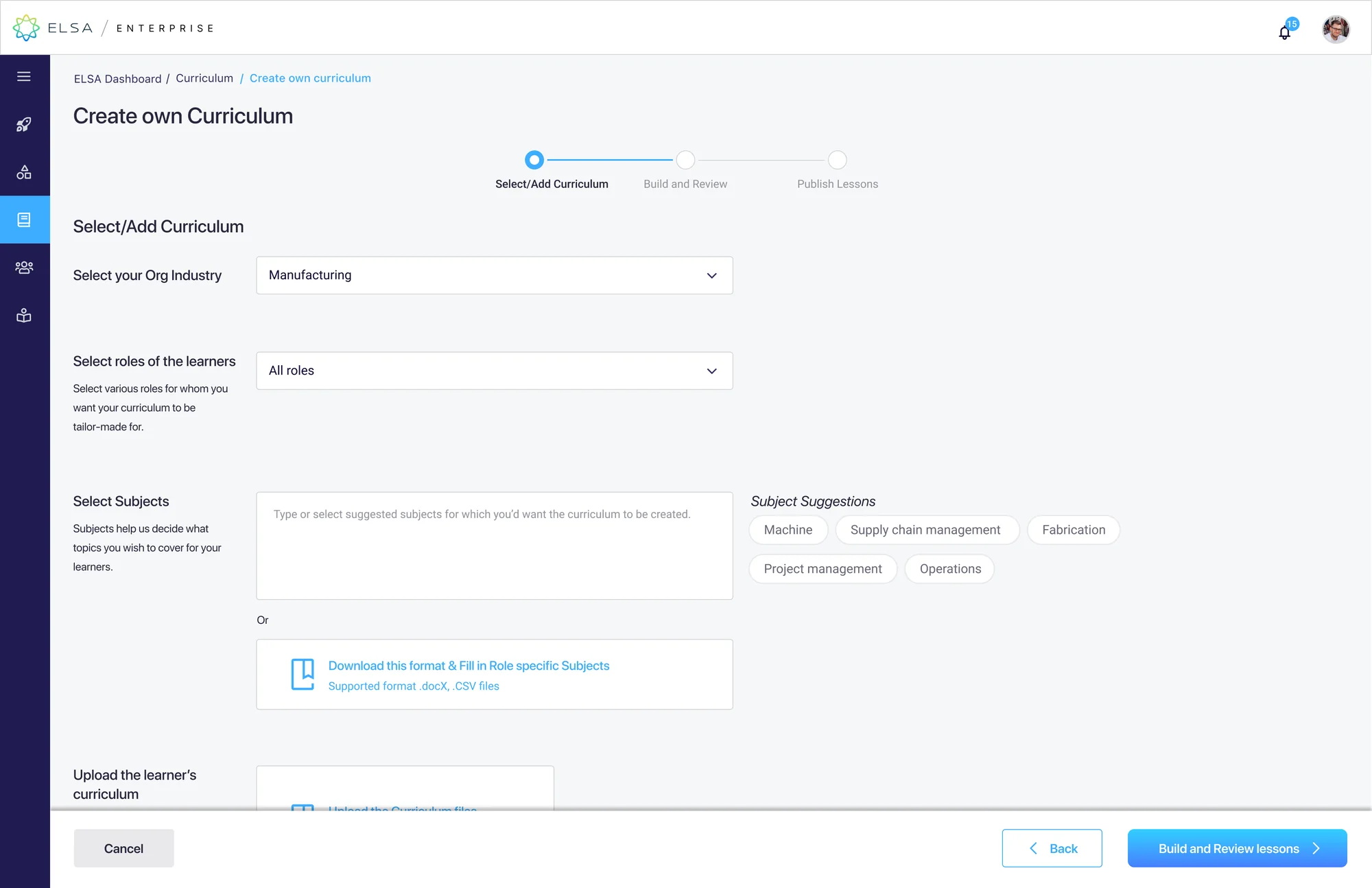
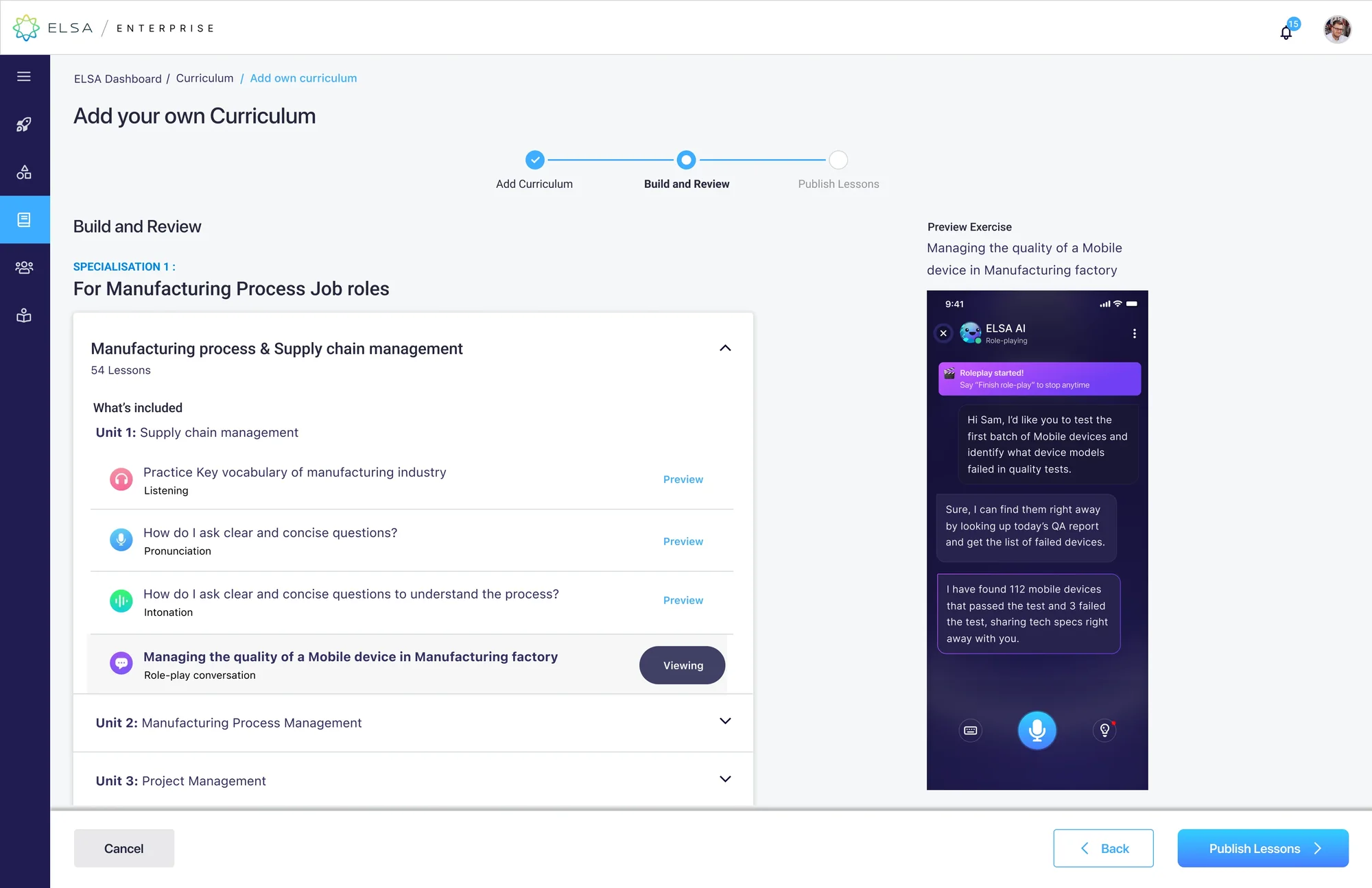
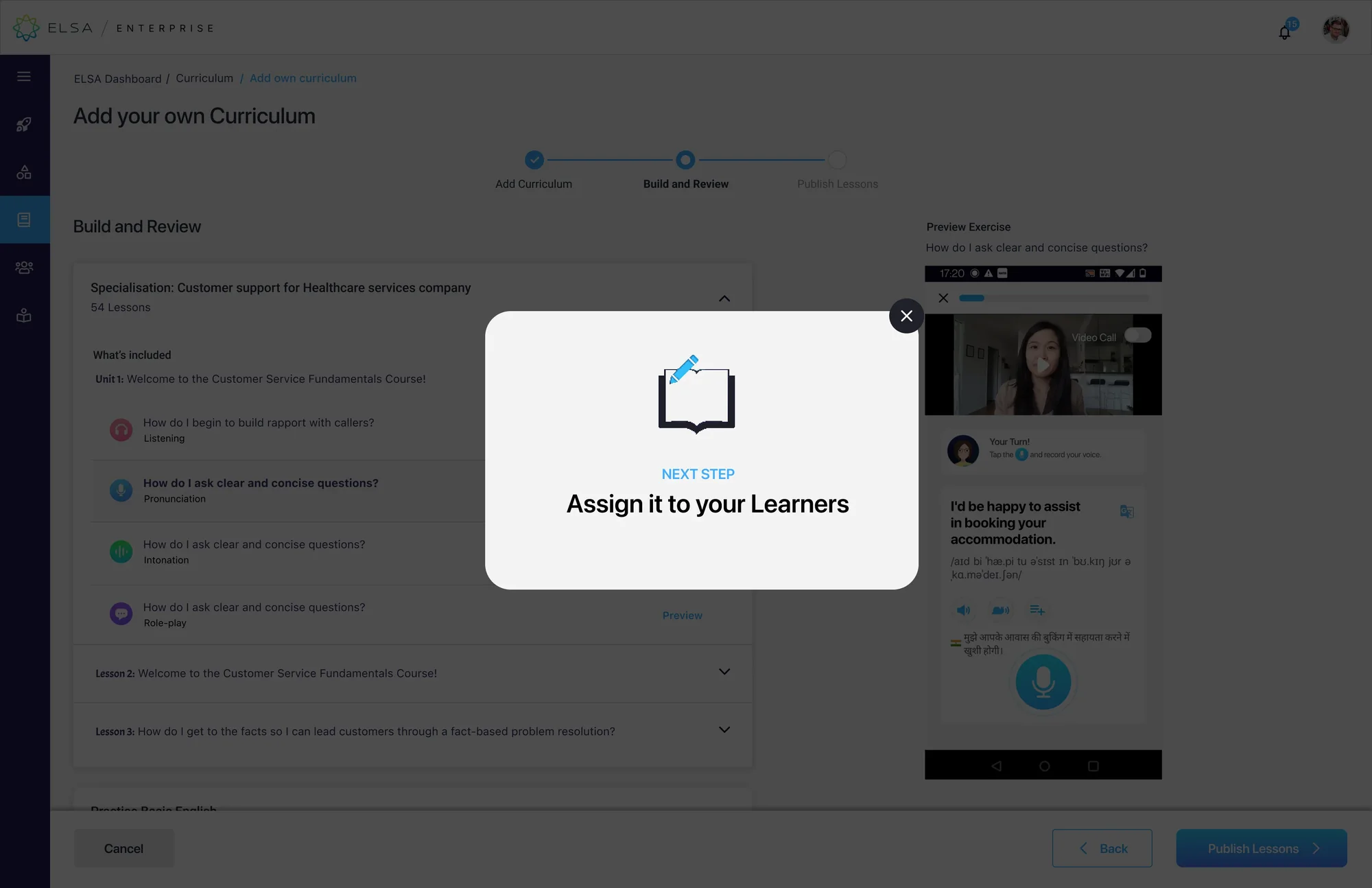
Every hotspot the Figma file had, in a full-screen player:
08 · Product · Solution 03
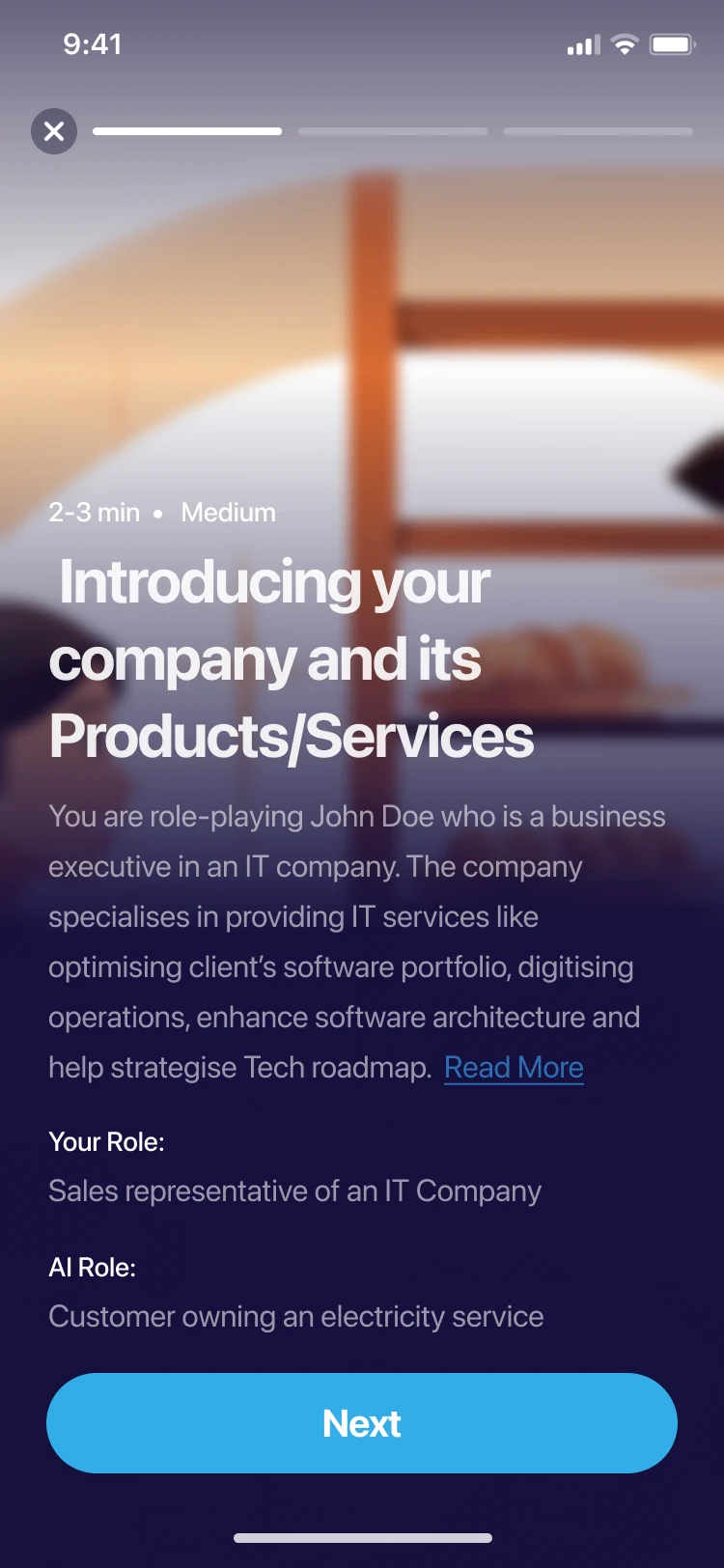
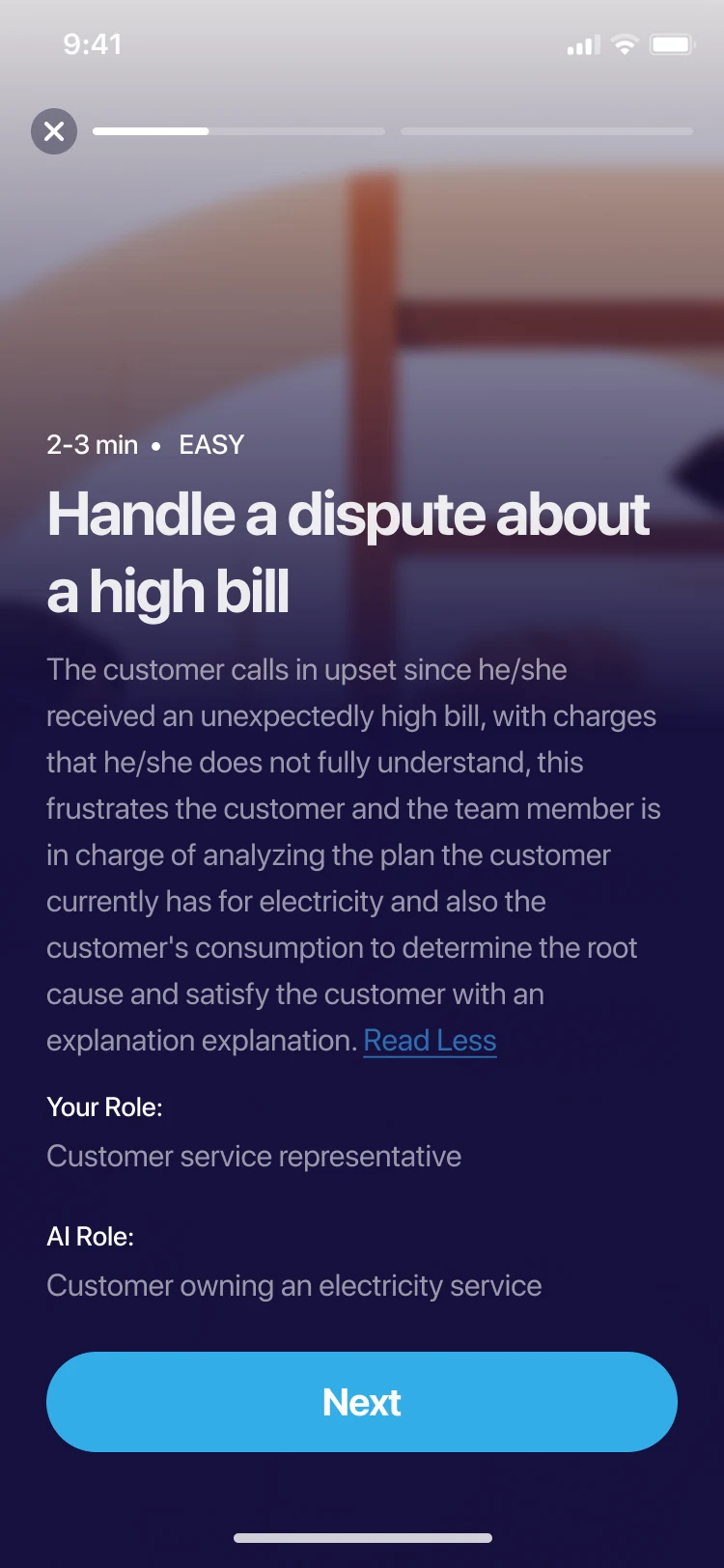
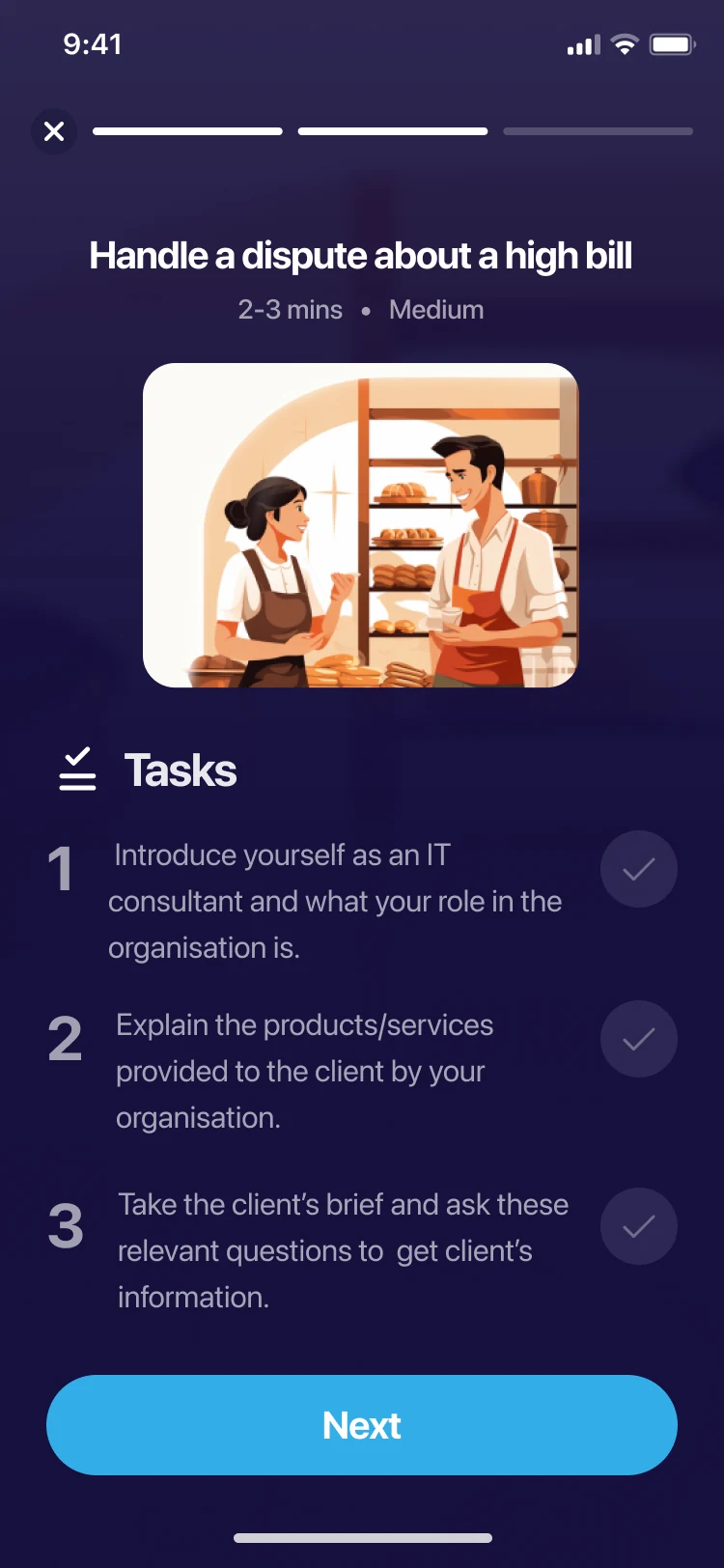
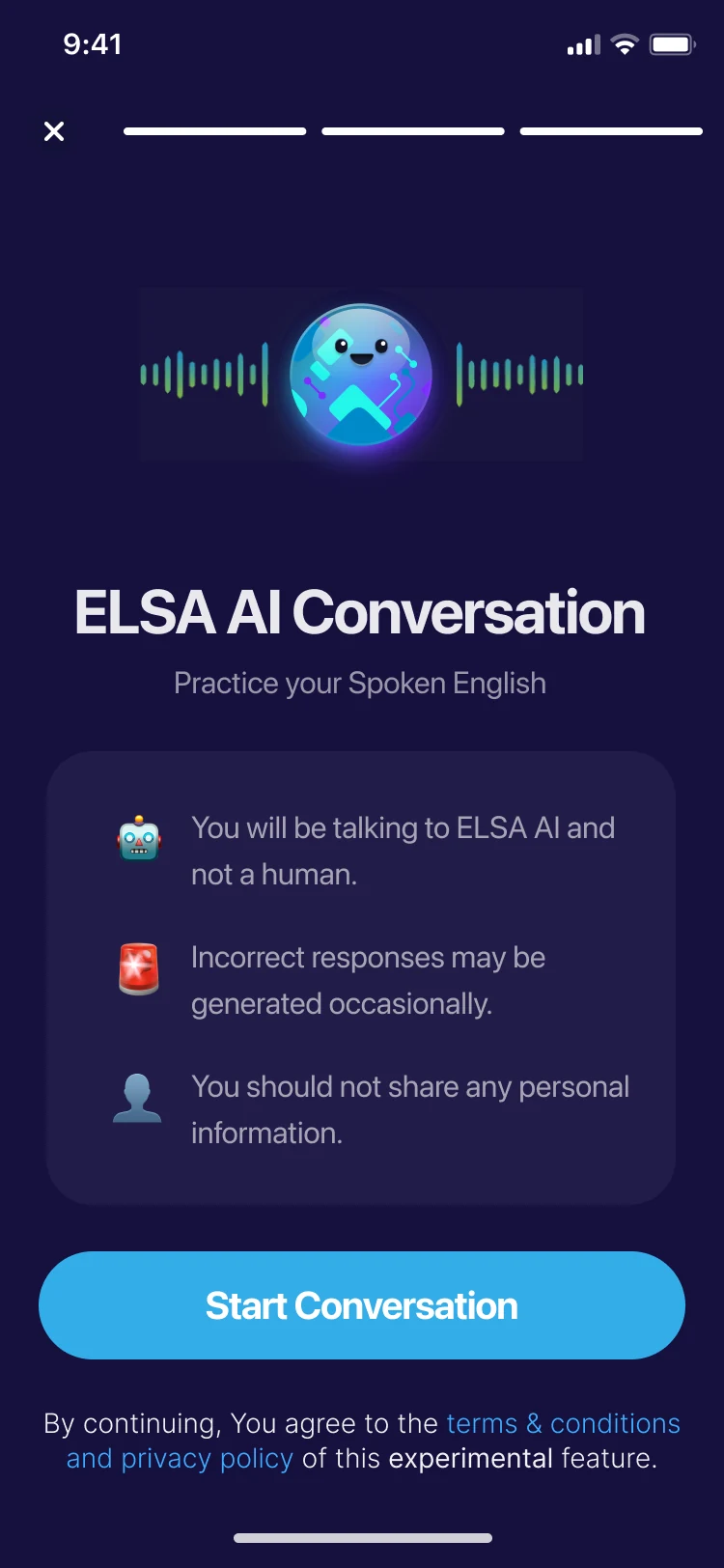
Practise a pre-built scenario for your business
As a learner, I want to see my organisation’s role-plays, start one, practise it and see my result.
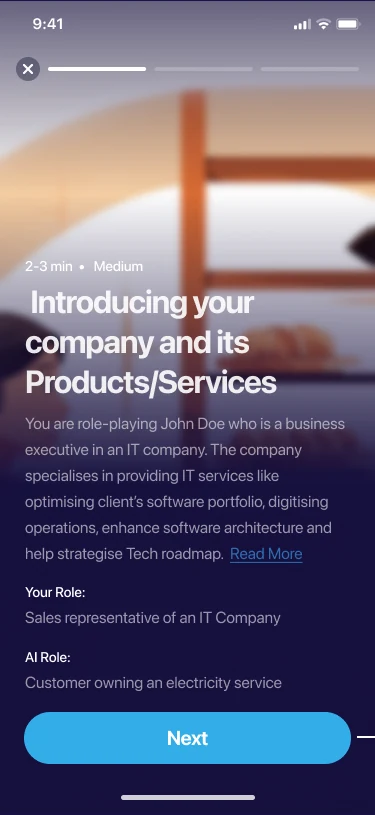
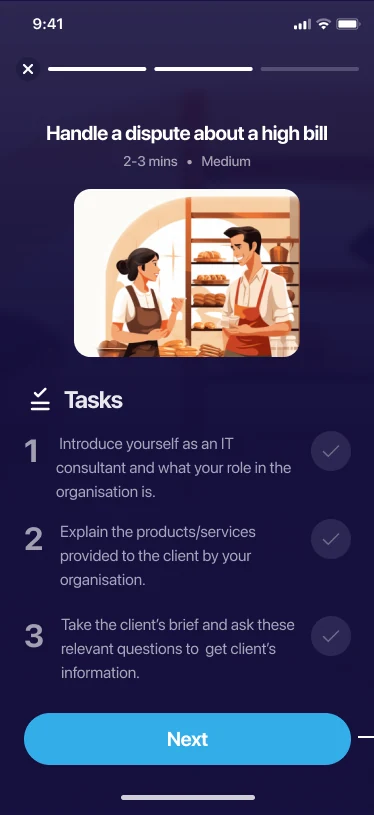
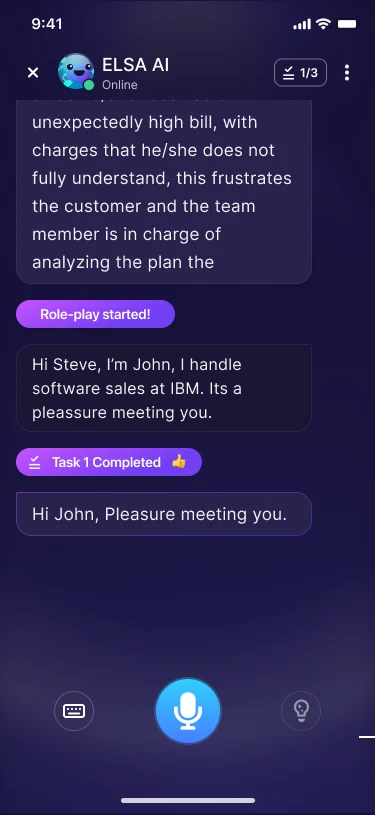
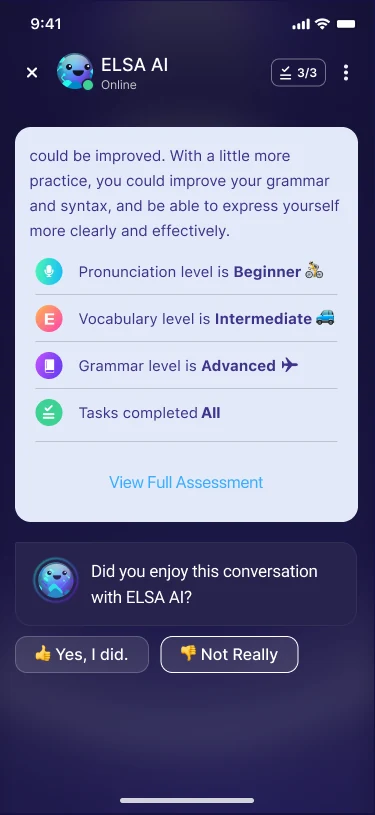
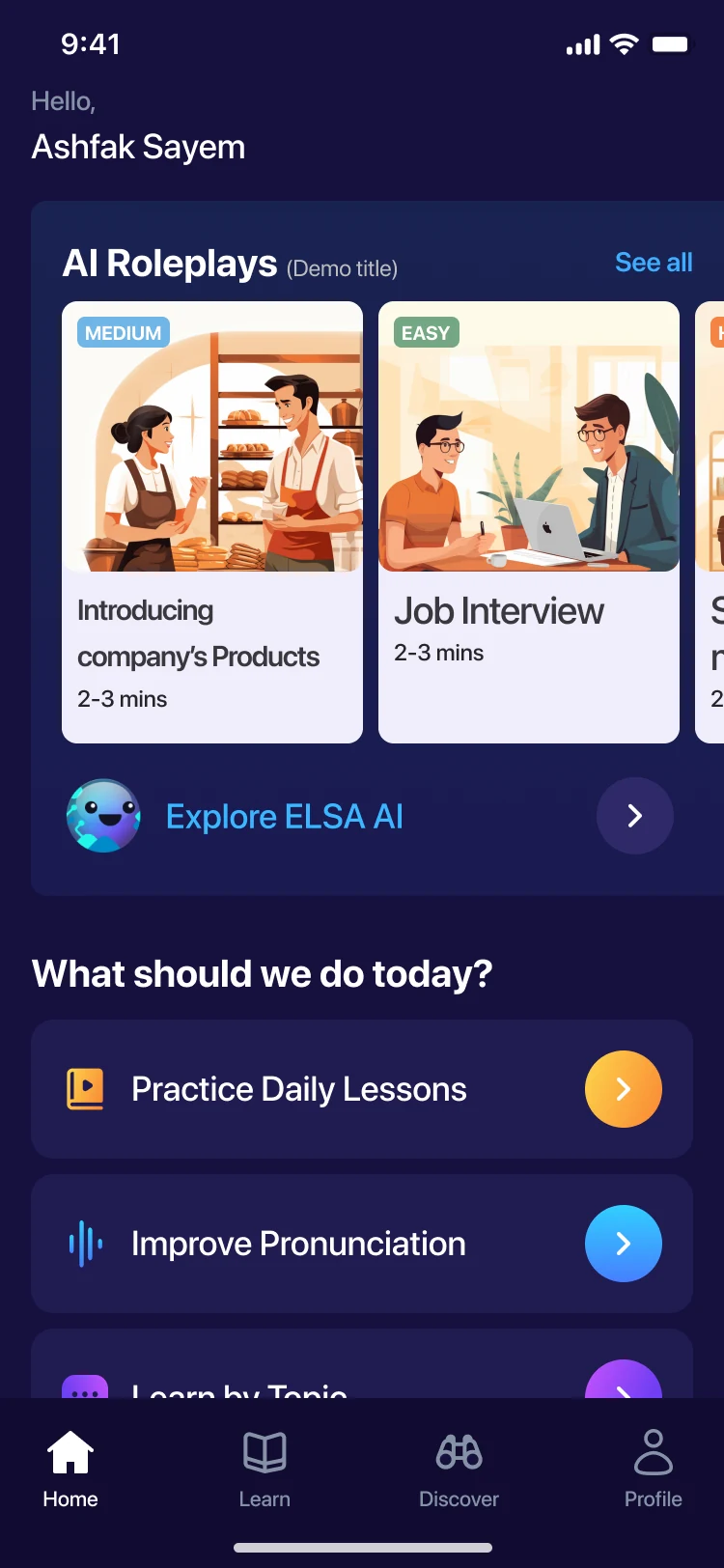
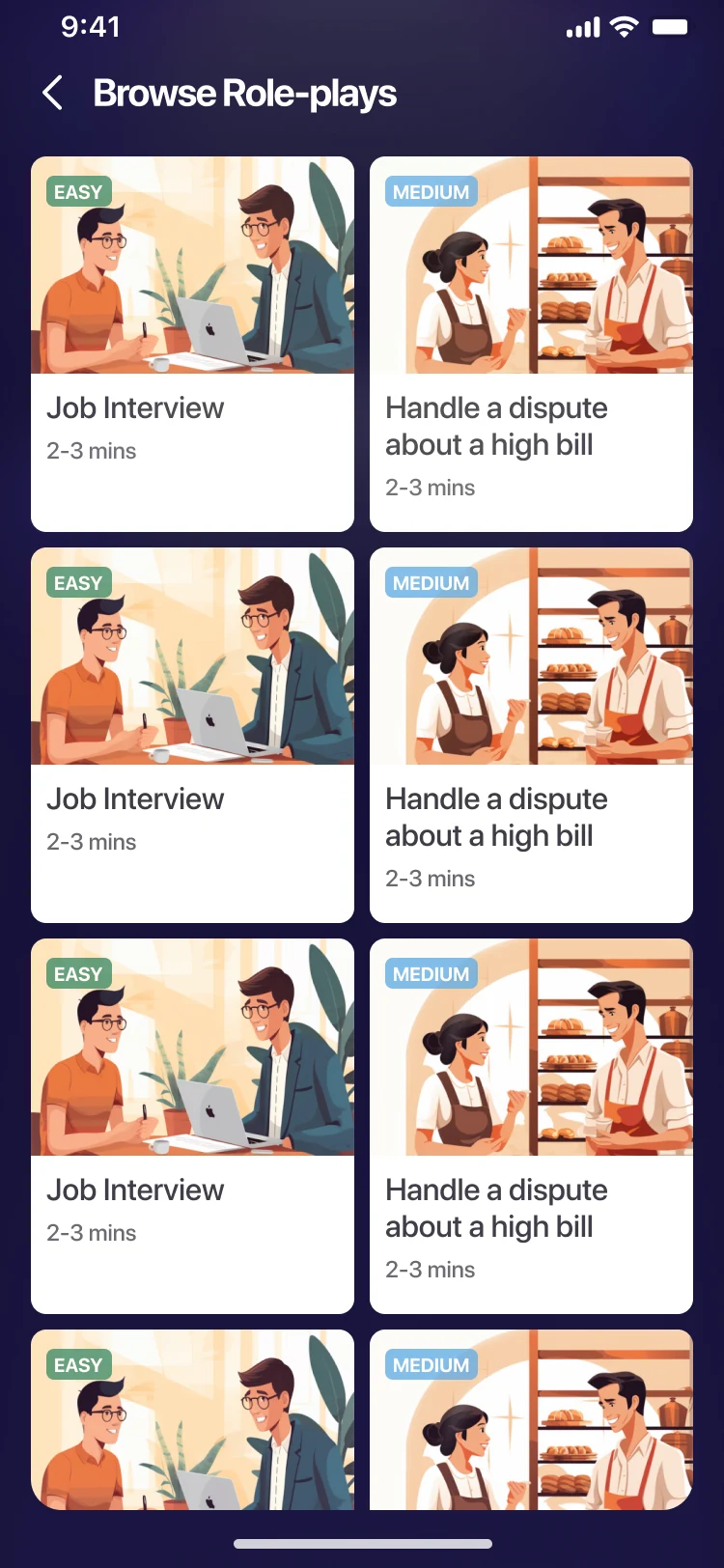
Browse role-plays
AI Roleplays on the home screen, then a grid of 2–3 minute scenarios.
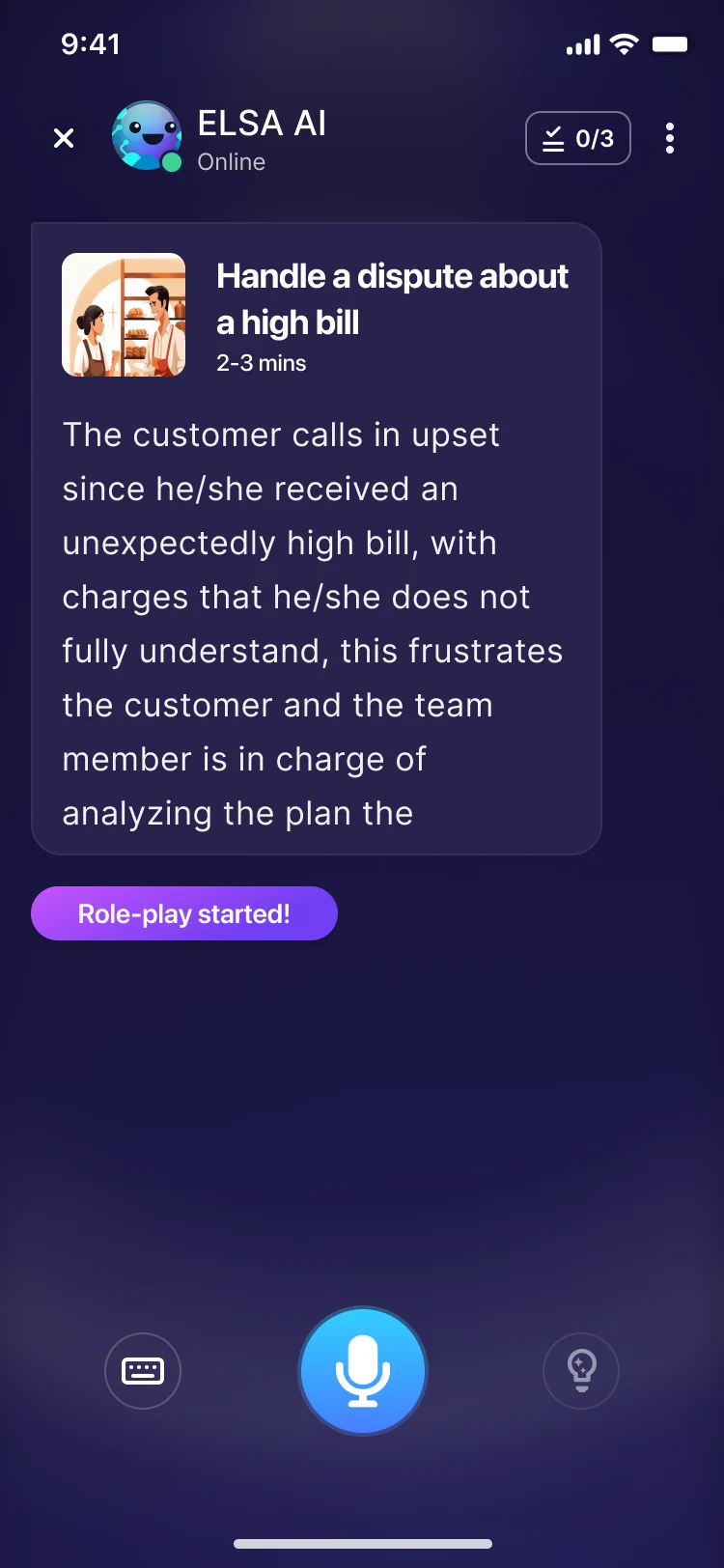
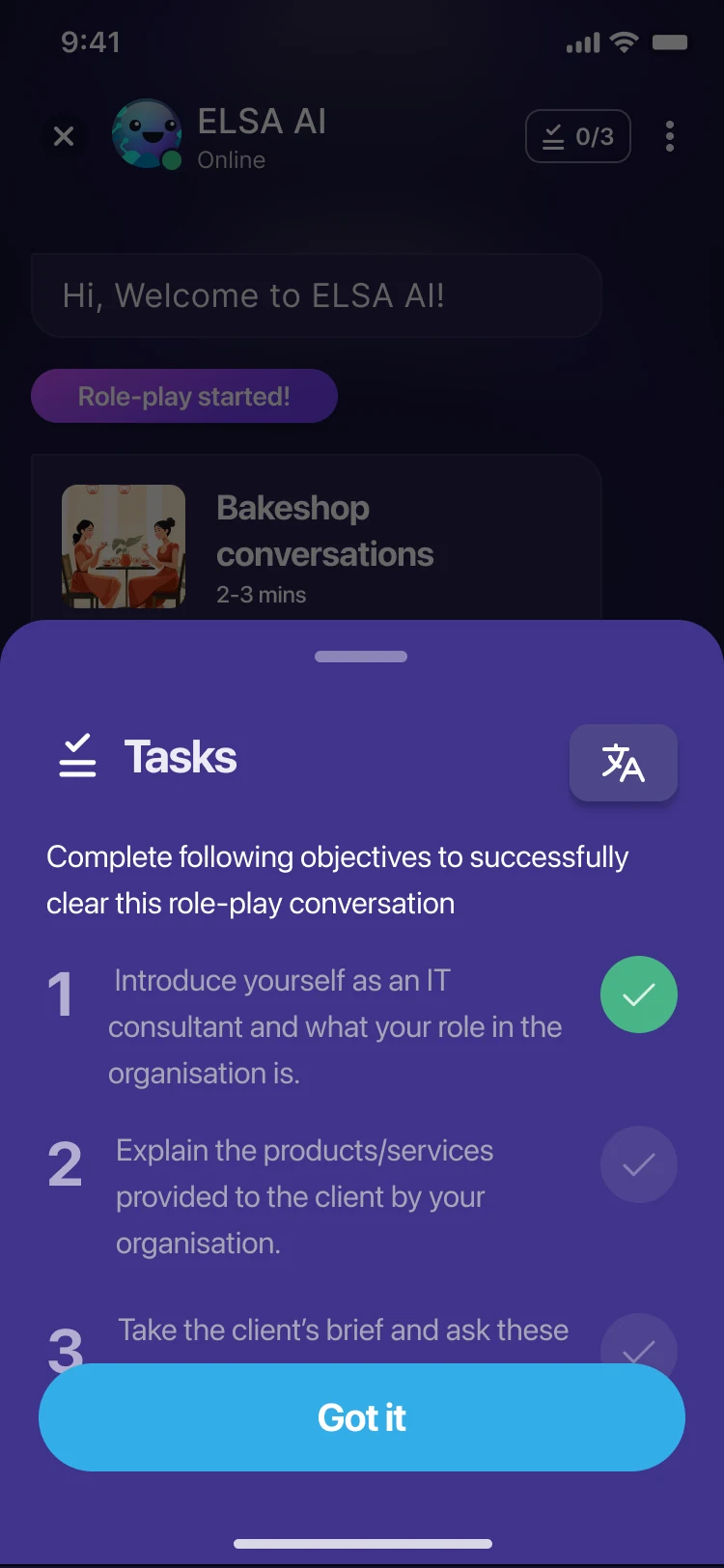
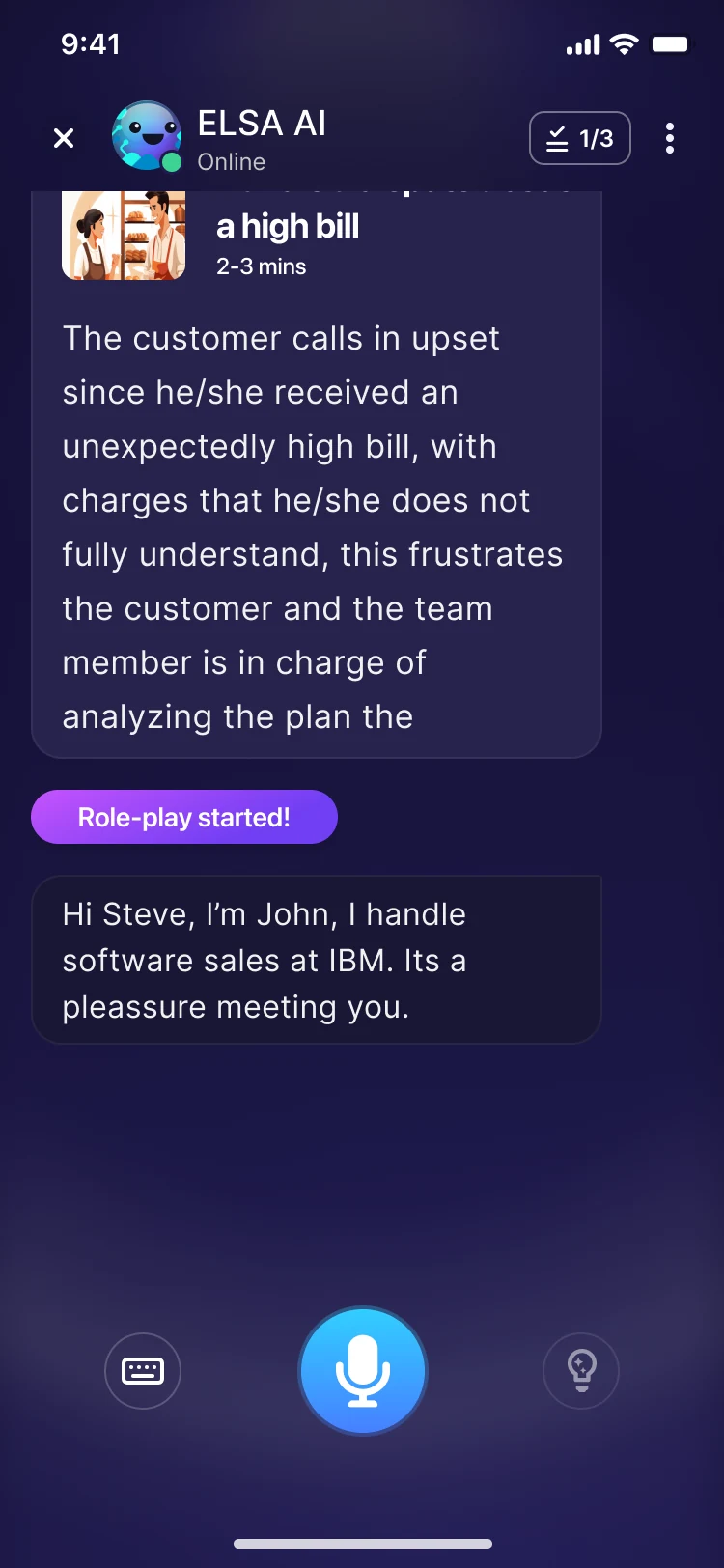
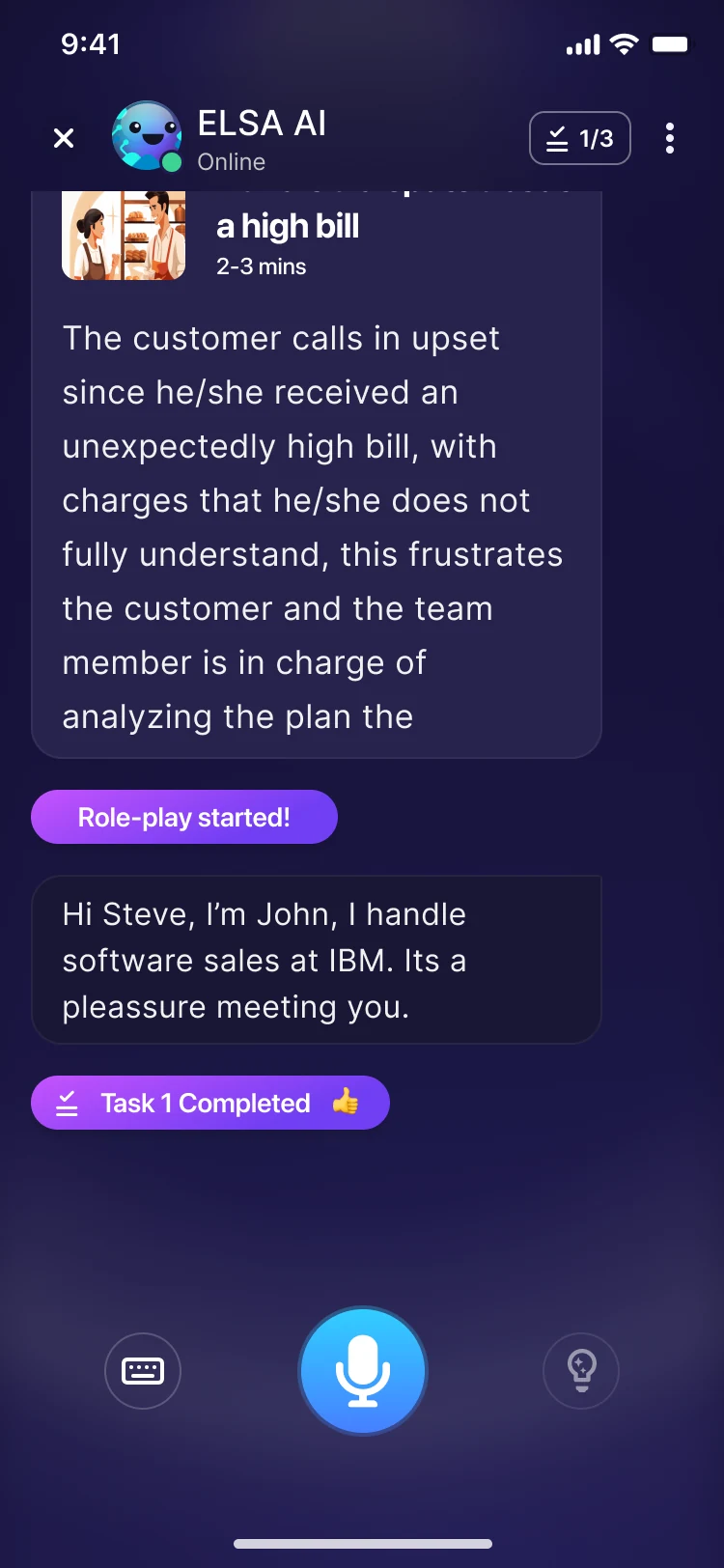
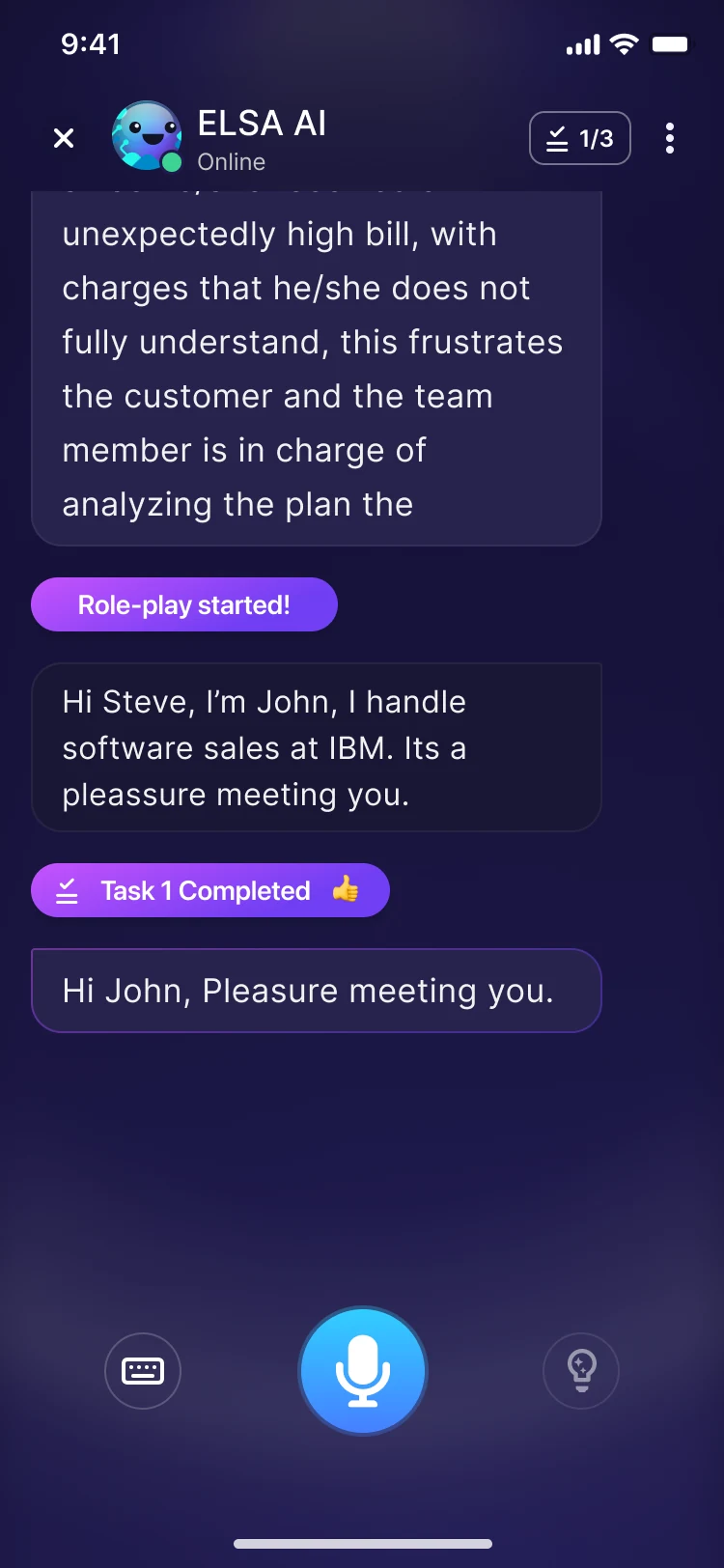
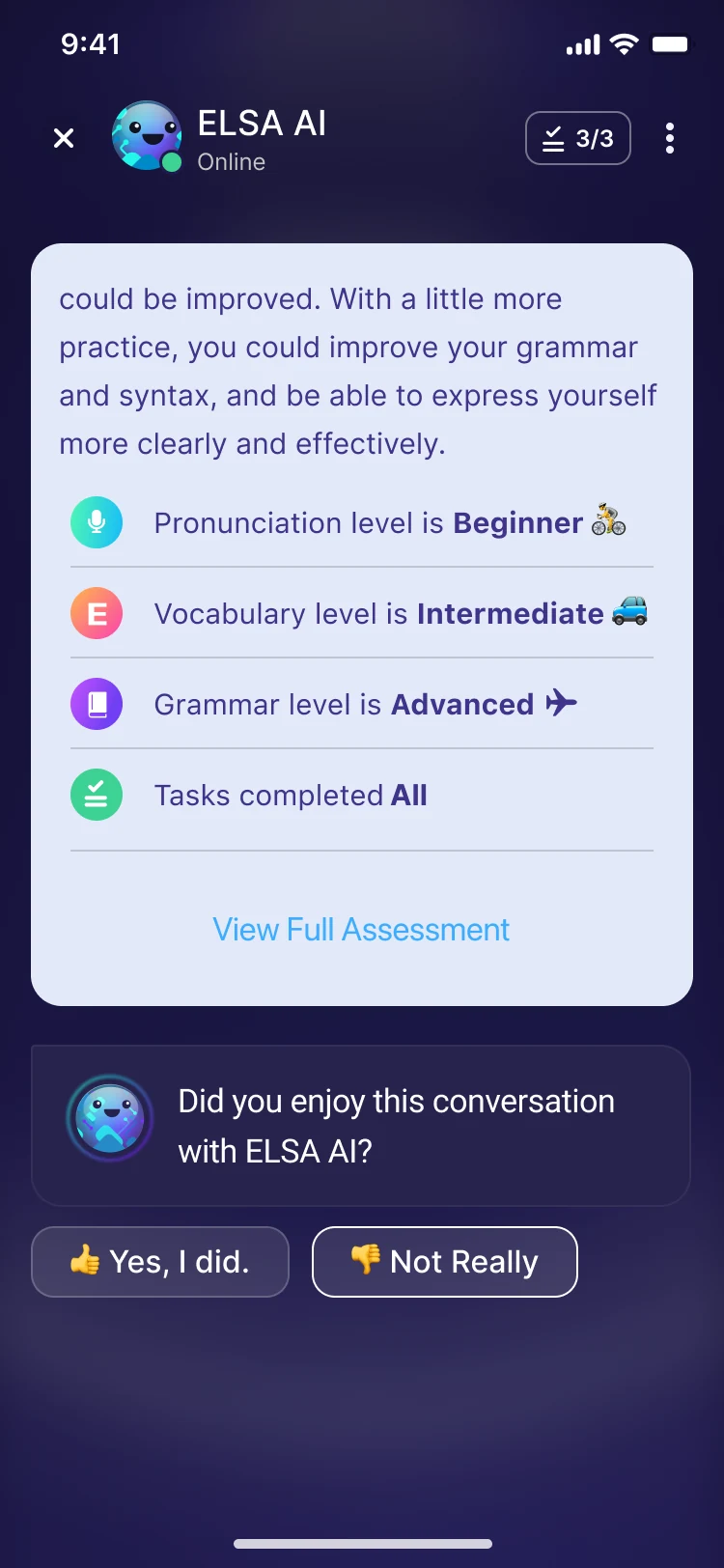
Run the scenario end to end:
Thank you
ELSA Speak B2B strategy · Staff Product Designer · 2023